


Breakthrough in Humanoid Robotics: Tars Demonstrates AI-Powered Embroidery at AWE 2026
At the recent AWE 2026 trade show in Shanghai, China, a groundbreaking advancement in humanoid robotics was unveiled, marking a pivotal moment in the evolution of machine intelligence. A robot demonstrated the ability to pick up a needle and embroider a specific pattern, a task that has long been considered a benchmark for fine motor dexterity. This achievement, which has eluded engineers for three decades, underscores the immense complexity of handling deformable objects like fabrics, threads, and wires, and highlights the transformative potential of AI in industrial automation.
Key Takeaways
- A robot at AWE 2026 successfully performed embroidery, a task requiring exceptional hand-eye coordination and fine motor skills, demonstrating the capabilities of advanced AI systems in replicating human dexterity.
- The breakthrough is attributed to Tars, a startup founded in February 2025, which developed a foundation model for robots in just months, showcasing the rapid pace of innovation in the field.
- Tars' AWE3.0 model, a universal embodied large model, enables robots to handle real-world tasks involving deformable objects, bridging the gap between theoretical AI and practical industrial application.
"The most interesting stuff went down at the booth for a company called Tars, which was founded as recently as February 2025." - AWE 2026 Report
Embroidery and wire harness assembly are among the most delicate tasks humans can perform, requiring a unique combination of hand-eye coordination, fine motor skills, and a nuanced understanding of thread tension. At AWE 2026, a robot showcased its ability to execute these tasks with remarkable precision, marking a significant milestone in the field of humanoid robotics. This development not only redefines the capabilities of industrial robots but also signals a paradigm shift in how machines interact with the physical world.

Tars, a company founded in February 2025, made a strong impression at the expo, despite its short existence. The company developed its own foundation model for robots and became a major exhibitor, demonstrating the potential of agile startups to disrupt established technological paradigms. Their approach, termed the "formula of super algorithms plus super embodiment, plus super applications," combines advanced AI with practical applications to solve real-world manufacturing and living problems. This innovative framework represents a new frontier in the integration of artificial intelligence and physical labor.
Until now, humanoid robots have excelled at handling rigid objects like parts and crates, but their performance has been limited when dealing with flexible materials. The challenge lies in the unpredictable nature of deformable objects, which change shape constantly. A wire sags, fabric folds unpredictably, and threads twist, creating an infinite state space that makes it difficult for robots to predict outcomes. This inherent complexity has posed a significant barrier to the widespread adoption of humanoid robots in industries requiring intricate manual tasks.
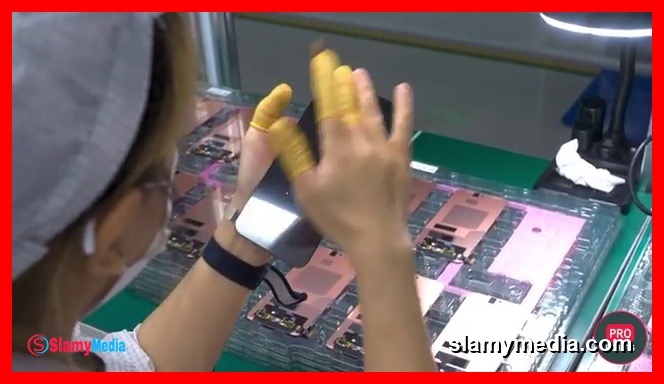
This is why tasks like smartphone cable routing and automotive wiring harness assembly still require human intervention. However, Tars' AWE3.0 model, which stands for AI World Engine, offers a potential solution. This model provides robots with a world model and autonomous intelligence, enabling them to function effectively in the real world. By simulating human-like understanding of object properties and interactions, the AWE3.0 model represents a critical step toward creating robots capable of performing tasks traditionally reserved for human artisans and technicians.
Imagine picking up a cup of coffee from a table. Your brain intuitively understands the cup's weight and properties, allowing you to predict what will happen in any scenario. The AWE3.0 model aims to replicate this intuitive understanding by training robots on real human interactions with objects in physical space. This approach not only enhances the precision of robotic actions but also enables robots to adapt dynamically to changing conditions, a capability that has been a major focus of research in the field of embodied AI.
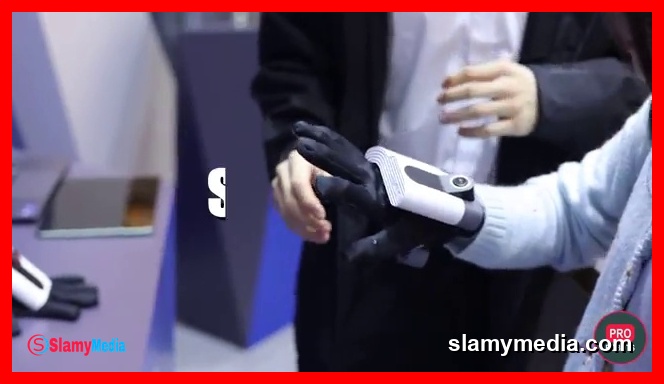
Behind this model lies a unique data collection method. Tars showcased this at AWE 2026 with a data collection kit called Sense Hub. Operators wear special gloves and a camera equipped with tactile, visual, and action sensors, simply working with their hands. The system meticulously records every micro movement of the hands, capturing real-world interactions that are essential for training robots to handle complex tasks. This innovative method of data acquisition underscores the importance of human-centric approaches in the development of AI systems, bridging the gap between abstract algorithms and tangible, real-world applications.



Conversations (0)