

When you pull into a gas station and choose between 87, 89, and 93 octane gasoline, you might assume the higher number means more power. It does not. The octane rating measures how much pressure the fuel can withstand before it explodes inside your engine. What you pumped last October is a completely different formula from what you’re pumping today. Same station, same price, different product. Every year, refineries across the country quietly alter the recipe for gasoline. But what exactly is in the fuel that runs your car? Why does it change with the seasons? And what was the one ingredient added in 1921 that poisoned an entire generation? The answer lies in the history of petroleum and the evolution of gasoline as a commodity.
Key Takeaways
- Octane ratings measure a fuel's resistance to self-detonation, not its energy content or power output.
- Leaded gasoline was introduced in 1921 as a solution to engine knocking, but its use led to widespread environmental and health consequences.
- Refinery processes such as cracking and reforming are essential for producing sufficient gasoline to meet modern transportation demands.
The Science of Gasoline: From Crude to Combustion
When Edwin Drake drilled the first commercial oil well in Pennsylvania in 1859, the prize was kerosene for lamps. The crude oil was heated in simple stills, and kerosene was collected. Everything else was considered waste. Gasoline, in particular, was so volatile and dangerous that refiners dumped it into rivers. The arrival of the automobile changed everything. The Ford Model T transformed gasoline from a waste product into the most valuable fraction in the barrel almost overnight.
But early gasoline had a violent flaw. Inside the engine, the fuel-air mixture was supposed to ignite only when the spark plug fired. Instead, it often detonated early from compression alone. The engine knocked and lost power. For six years, a General Motors chemist named Thomas Midley tested over 33,000 compounds—melted butter, camphor, iodine, arsenic. Then, in December 1921, he added a tiny amount of tetraethyl lead. The knock disappeared.
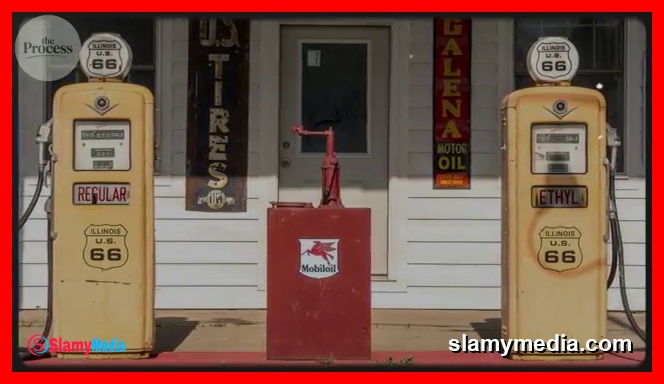
Lead was cheap to produce and could be patented, giving it an edge over alternatives like ethanol, which could not be patented. Farmers with stills could produce ethanol freely, posing a threat to oil companies’ control of the fuel supply. Thus, lead won. GM and Standard Oil formed the Ethyl Corporation and sold leaded gasoline under the brand name Ethyl. The word “lead” never appeared in a single advertisement. Within a decade, it was in 90% of American fuel.
The Refinery Process: How Crude Oil Becomes Gasoline
When crude oil enters a refinery, it is heated in a furnace at around 350 degrees. Most of it becomes vapor, rising into a distillation column—a steel tower as tall as a ten-story building. Different molecules condense at different heights. Light gases rise to the top, gasoline condenses near the upper third, while diesel and kerosene settle lower. Heavy residue sinks to the bottom. This single step separates every major petroleum product at once.
But only about 20 to 25% of the barrel naturally falls in the gasoline range. The world needs far more than that. Refiners crack the heavy fractions, breaking large hydrocarbon molecules into smaller ones using extreme heat and a powdered catalyst. Heavy oil that would otherwise become asphalt is split into molecules light enough to burn in a car engine. This process nearly doubles the amount of gasoline a barrel can produce. Without it, there would not be enough fuel to keep a single city moving.
Cracked gasoline, however, has a low octane rating and knocks. It passes through a reformer where the molecular shape changes. Straight-chain hydrocarbons get bent and branched into ring structures that resist premature ignition. This is what octane measures—not energy, not power, but resistance to self-detonation under pressure. 87 means the fuel behaves like a specific reference blend under test conditions. 93 means it tolerates higher compression before igniting on its own. A car designed for 87 extracts no more power from 93. The fuel just resists knock. That was never going to happen.
After reforming comes the part nobody sees. Twice a year, the recipe changes. In winter, gasoline contains about 10% butane—the same chemical in a cigarette lighter. It vaporizes easily in cold weather, ensuring the fuel flows smoothly through the engine. In summer, the blend includes more additives to prevent vapor lock and protect against ozone formation. These seasonal adjustments are crucial for maintaining engine performance and reducing emissions, but they also mean that the fuel you pump today is chemically different from what you pumped last year.


Conversations (0)