


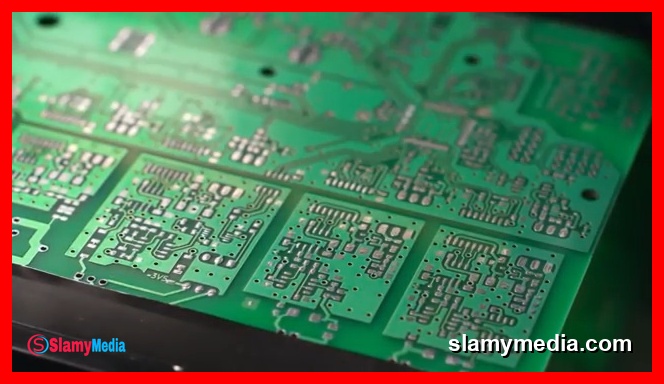
The color green has become synonymous with technology, a hue that dominates everything from vintage radios to modern laptops. Yet, this deep, forest-green coating is far from a mere aesthetic choice. It’s a result of a confluence of evolutionary biology, Cold War military secrets, and industrial accidents. Today, we unravel the story behind why electronics have remained green for decades.
Key Takeaways
- Green solder masks were developed in the late 1970s to protect circuit boards from corrosion and damage.
- Human vision and evolutionary biology played a key role in making green the most visible and legible color for circuit board inspection.
- Military specifications mandated the use of green circuit boards, which were later adopted by the civilian industry.
The Evolution of Printed Circuit Boards
A printed circuit board (PCB) is essentially a layered sandwich. At its core lies a base material—typically phenolic paper, a blend of wood fibers and resin—dyed in a pale tan or dark brown. Over this, manufacturers bond a thin layer of copper, etching intricate patterns into the surface. The result is a functional circuit that carries electricity.
But early PCBs were far from perfect. The copper traces were fragile, prone to oxidation, and susceptible to short circuits during soldering. This fragility posed a significant challenge as devices grew smaller and more complex.
The Birth of the Solder Mask
The solution came in the late 1970s with the invention of the solder mask. This protective layer of pigmented resin covered the board except for the specific points where components needed to be soldered. Its purpose was simple yet critical: to prevent corrosion, shield delicate traces from damage, and act as a dam to contain solder.
While solder masks could be colored in almost any hue, green remained the dominant choice. Apple favored black, and prototypes often went for red, but green held its ground. The reason? It was the result of a perfect alignment of human biology, military needs, and industrial pragmatism.
Human Vision and Evolutionary Biology
Human vision played a pivotal role. Before the advent of high-tech inspection tools, every circuit board had to be examined by a human eye. This process led to immense eye strain. Manufacturers experimented with colors to find the best contrast.
The raw resin was naturally honey-brown, making it difficult to see the copper traces. Red created a messy, rust-like appearance, while blue was too dark. Green, however, struck the ideal balance. Evolutionary biology suggests this preference is rooted in our primate ancestors, who needed to distinguish between hundreds of green shades to navigate dense jungles. Our eyes are most sensitive to green light, making it the optimal choice for visibility.
Cold War Influence and Military Adoption
This biological advantage was further cemented during the Cold War. In 1954, the U.S. military conducted trials to determine the most legible color combinations for equipment. They found that white text on a green background was the easiest to read under varying light conditions.
As the military became the largest buyer of electronics, they mandated that circuit boards be green. Manufacturers, seeking efficiency and profitability, adopted the military specification green for civilian use as well. By the time computer-aided inspection systems emerged, the industry was already locked into the green standard.
Chemical and Industrial Factors
The chemical properties of green also played a role. A green solder mask can produce solder dams as small as 0.1 millimeters, far smaller than the 0.12 millimeters achievable with other colors. This precision is not due to green’s inherent magic but to decades of research and development focused on refining the formula.
Other colors received less attention, leaving them as an afterthought. Today, the persistence of green is largely due to industry inertia. Switching to a different color would require shutting down production lines, scrubbing out old resin, and dealing with significant material waste. Since circuit boards are typically hidden within plastic casings, the cost of change outweighs the benefits. The green circuit board is a perfect storm of evolutionary biology, military history, and chemical optimization. It’s a testament to how, in engineering, if something works perfectly, we rarely find a reason to change.







Conversations (0)