

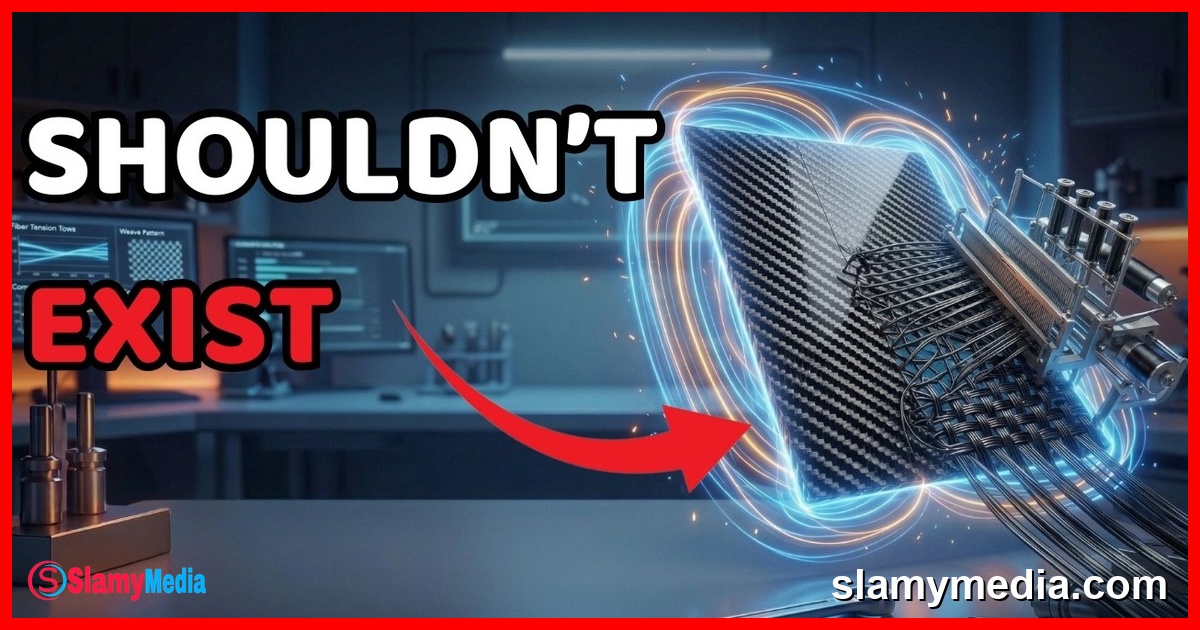
Imagine holding a sheet of material thinner than your finger. You tap it, it feels light, almost delicate. Then someone tells you it's stronger than steel. Not slightly stronger, significantly stronger, and it weighs almost nothing. Your brain doesn't want to believe that, because everything we know about strong things tells us they should be heavy, dense, solid, a steel beam, a concrete wall, an iron safe. Strong things have mass. That's just how it works. Except carbon fiber breaks that rule completely.
Key Takeaways
- Carbon fiber is a composite material composed of carbon atoms arranged in long, repeating chains, making it both incredibly strong and lightweight.
- Its strength-to-weight ratio is up to seven times greater than steel, revolutionizing industries like aerospace, automotive, and cycling.
- The manufacturing process is complex, involving precise layering and curing, which contributes to its high cost and limited widespread adoption.
The Science Behind Carbon Fiber's Unmatched Strength
Think about a rope. A single strand of thread is easy to snap with your fingers, but twist thousands of those strands together, braid them, layer them under tension, and suddenly you have something that can hold the weight of a car. The material didn't change. The structure did. Carbon fiber works on exactly the same principle, but taken to an extreme that feels almost impossible.
At the heart of carbon fiber are incredibly thin strands of carbon atoms bonded together in long repeating chains. Each individual fiber is roughly five to 10 micrometers in diameter. To put that in perspective, a single human hair is about 70 micrometers wide. These fibers are thinner than anything you could see with the naked eye. On their own, those fibers are fragile. You can break one easily, but engineers don't use them alone.
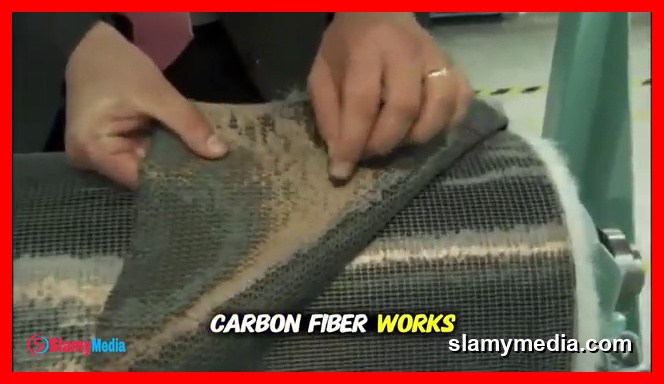
The fibers are bundled into toes, then woven into sheets, layer upon layer, each layer oriented in a slightly different direction. Then those layers are locked together with a resin, a kind of rigid glue that holds the whole structure in place. What you end up with is something that looks almost like fabric, but behaves like a completely different category of material.
The Mechanics of Force Distribution
Here's where it gets interesting. When a force hits a solid object like a steel rod, that stress concentrates in one spot. The material has to absorb it all right there. That's why metal can bend, crack, or deform under enough pressure. Carbon fiber distributes that force differently. The woven structure spreads the stress across thousands of fibers simultaneously. No single point takes the hit alone.
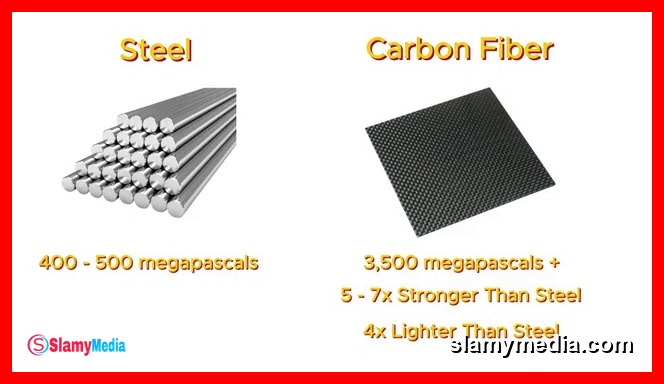
Now here's the number that changes everything. Steel has a tensile strength of roughly 400 to 500 megapascals. That's the force it can withstand before breaking under tension. High quality carbon fiber composites can reach 3,500 megapascals or higher. That's five to seven times stronger than steel. And the weight carbon fiber is roughly four times lighter than steel by volume. That combination shouldn't exist, and yet it does.

Revolutionizing Industries Through Strength and Lightness
This is what engineers call the strength to weight ratio. And in certain industries, it changes absolutely everything. Take aircraft. Every kilogram you remove from a plane means less fuel burned per flight. Over thousands of flights that adds up to enormous savings. The Boeing 787 Dreamliner is made of roughly 50% carbon fiber composite by weight. It uses 20% less fuel than comparable aircraft made from aluminum. That's not a small improvement. In aviation, that's revolutionary.
Formula one racing cars are almost entirely carbon fiber. Not just for the obvious performance reasons, though a lighter car does accelerate faster and handle better. More importantly, carbon fiber can be designed to absorb crash energy in a very specific way. The safety cell around the driver 
is built to protect during impact in ways that metal simply can't replicate. Supercars use it to keep weight down while maintaining rigidity. Cycling teams use it for frames that way almost nothing but flex in precisely the right direction. Aerospace companies use it for components that face extreme temperature changes and forces beyond anything a car or plane would encounter. The same principle every time. Less weight, more strength, more control over how force moves through the structure.
The Cost and Complexity of Carbon Fiber Manufacturing
Manufacturing carbon fiber is slow, technically demanding, and expensive. Laying up layers by hand, curing them


Conversations (0)