

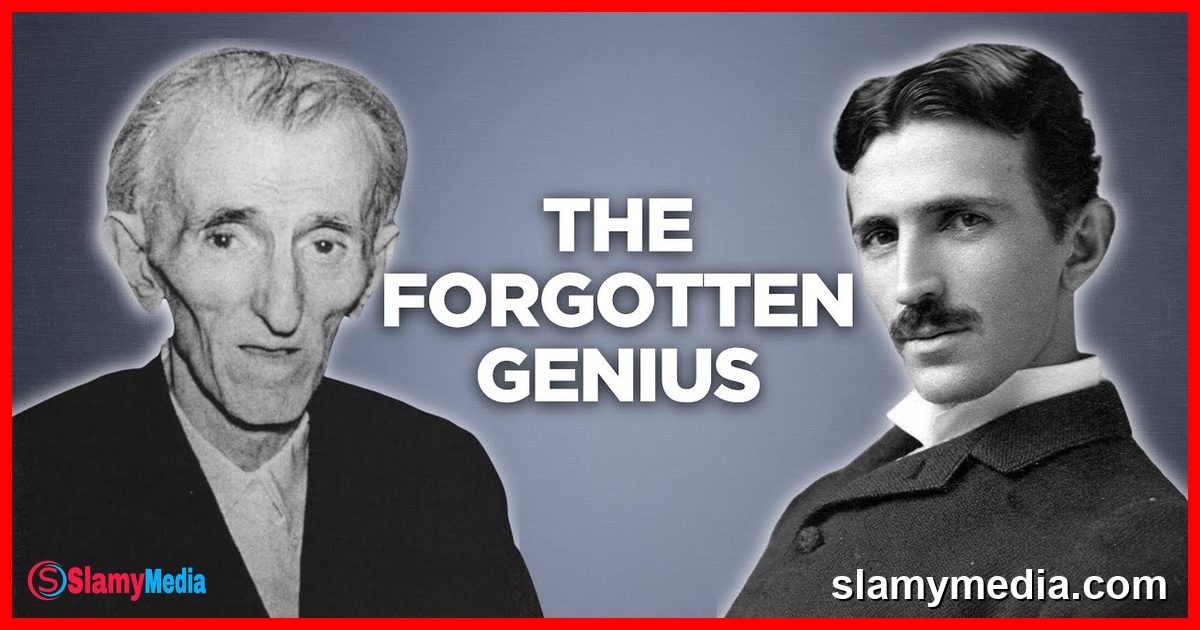
When you think about the greatest inventors of all time, there are a few names that come to mind. Henry Ford, the Wright Brothers, Thomas Edison, but there is one name that is not as recognizable. When you plug your phone in, turn on the lights or use the refrigerator, you have Nikola Tesla to thank. This is the story of the forgotten genius, and the story begins at the end. On January 7, 1943, a maid working at the New Yorker Hotel walked into Room 3327, where she found the body of an 86-year-old man who called the hotel home for the past decade. Tesla died alone and broke. He lived off a diet of warm milk and crackers and was obsessed with feeding the pigeons outside. One of the greatest inventors of all time faded into obscurity and died penniless.
Key Takeaways
- Nikola Tesla is often overshadowed by contemporaries like Thomas Edison, despite his foundational contributions to modern electrical systems.
- Tesla's alternating current (AC) system revolutionized the global power grid, enabling long-distance electricity transmission.
- His obsession with pigeons and financial struggles highlight the tragic irony of a visionary who failed to secure his legacy in his lifetime.
Nikola Tesla was born in the town of Smiljan, now part of Croatia, on July 10, 1856. He was born during a lightning storm. According to family legend, the midwife said halfway through the birth, this child will be a child of darkness, to which his mother replied, 'No, he will be a child of light.' Little did she know how prophetic those words would be. When Tesla was five, he witnessed his older brother fall from a horse and later die. This would haunt him for the rest of his life. As a child, he began seeing visions accompanied by flashes of light, confusing what was real and what was imaginary. This never went away. The visions spurred his ability to conceive inventions in his head in such detail that he didn't even need to draw them out. He explained how the designs were perfected in his mind in an article in 1919. And variably, my device works as I conceived that it should. An experiment comes out exactly as I planned it. In 20 years, there has not been a single exception. Tesla credits his mother for his interest in invention.
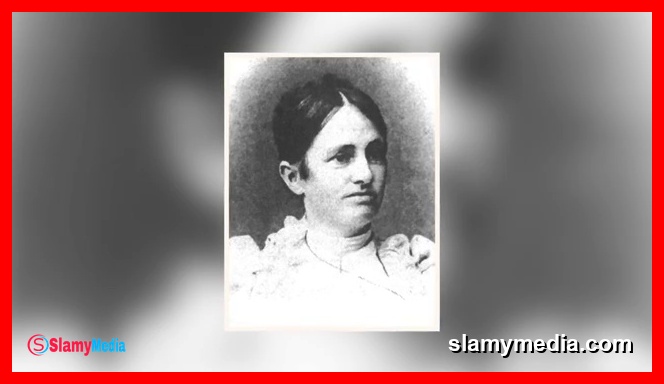
Juka Mandic, Tesla's mother, invented small household appliances in her spare time. She had an idetic memory, the ability to recall an image from memory with high precision. And she passed this on to her son. Tesla's father was a priest and wanted him to become one, too. But Tesla was interested in engineering. When he contracted cholera as a teen and nearly died, his father promised to send him to engineering school if he survived and, miraculously, he did. He went to study in Austria at the technical college of Graz, where he is said to have worked from 3 a.m. until 11 p.m. Every day. Professors were worried that he would die from exhaustion. Tesla had a beautiful mind. He could perform calculus in his head and spoke eight languages. He was a good student at the start, but would not finish school. He dropped out after becoming addicted to gambling and cut ties with his family so they wouldn't find out. His friends didn't know what happened to him either. They thought he drowned in a river.
Tesla moved around Europe and eventually ended up in Budapest, working as an electrician at a telephone company. While walking around a park in the city one day, he had an epiphany about developing a new way of generating electricity using alternating current. Who would be his greatest invention that would change the world? I'll explain more about AC a little later. In 1882, he settled in Paris to work for the French branch of Thomas Edison's electric company. He started off installing indoor lighting, but the managers noticed his talents and had him doing more complicated work, designing and building dynamos and motors. He was soon traveling throughout Europe, fixing problems at other Edison branches. Two years later, in 1884, Tesla's manager offered him a job at Edison Machineworks in New York City. He agreed and arrived in America with only four cents in his pocket because his money was stolen on the boat ride over. Tesla initially had a good impression of Edison. Edison was also impressed by Tesla, later saying, 'I have had many hardworking assistants, but you take the cake.' This mutual admiration would soon turn into a bitter rivalry.
The War of Currents
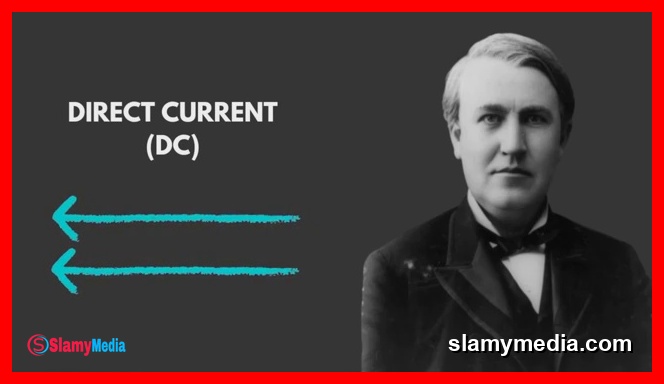
By the late 1880s, Tesla had developed his alternating current (AC) system, which allowed for the transmission of electricity over long distances, a critical advancement for the growing demand of industrial and urban power. Meanwhile, Thomas Edison was promoting direct current (DC), which was limited in its ability to transmit power over long distances. This sparked the War of Currents, a fierce battle between the two inventors and their respective companies. Edison, fearing the dominance of AC, even resorted to discrediting it through public demonstrations, including the electrocution of animals to show its dangers. Tesla, however, remained undeterred, believing in the superiority of AC for its efficiency and scalability.
Despite the fierce competition, Tesla's AC system ultimately prevailed. The Edison Electric Illuminating Company eventually adopted AC, and the Westinghouse Electric Corporation became a key player in the AC movement. This victory marked a turning point in the electrification of the modern world. Tesla's work laid the foundation for the power grids that power homes, industries, and cities today.
The Legacy of a Forgotten Genius
Tesla's later years were marked by financial struggles and a lack of recognition for his contributions. Despite his groundbreaking work, he never received the acclaim or wealth that his inventions deserved. He lived in relative obscurity, often relying on friends and patrons to support him. His final years were spent in New York, where he continued to work on various projects, including the Transcontinental Radio-Telegraphy System and the World Wireless System, which aimed to enable global communication without the need for wires.
Despite his personal hardships, Tesla's legacy endures. His AC system remains the backbone of the modern electrical grid, and his visionary ideas have inspired generations of scientists and engineers. Today, Tesla is celebrated as one of the most important inventors in history, with companies like Tesla, Inc. bearing his name as a tribute to his contributions to technology and innovation. The story of Nikola Tesla is not just one of invention, but of perseverance, vision, and the enduring impact of a genius who was ahead of his time.


Conversations (0)