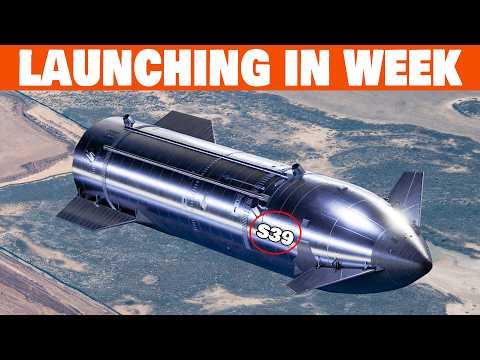
SpaceX is in the final prep stages for Starship Flight 12, the first flight of the year, and it's dropping in April with a ton of exciting stuff about to be revealed. The clearest sign, not only has the super heavy booster been making moves, but Starship Ship 39 has now been fitted with its first Raptor 3 engines. That's a huge signal that one of the most important tests is coming up very soon. It could even launch right after Artemis II, NASA's crude mission to the moon, which is happening tomorrow. So, where exactly are we at with the progress, and when are they actually going to launch? Let's find out now it's been about two weeks in SpaceX's first static fire test, with booster 19. Shortly after the test, the massive super heavy block 3 quietly rolled back from pad 2 to megabay 1 under the cover of darkness. The goal was to install the remaining 23 engines to complete the full set of 33. They may have already finished that part by now. At SpaceX's pace installing the engines is the easy part. The real work lies in making sure the entire booster is truly ready with thorough checks and integration. Just look at how things have evolved. With early prototypes like booster 4, SpaceX once mounted 29 Raptor engines in a single night. Starting from booster 7, the same process stretched from 3 to 10 days. Not because they became slower, but because the vehicle grew far more refined complex and demanded much stricter verification. But this time, it's different. For the first time in Starship history, a booster is being equipped with a full set of 33 Raptor 3 engines, the most powerful, cleanest and simplest version ever built. Higher thrust fewer parts and a major leap in reliability compared to Raptor 2. SpaceX is clearly moving into a new generation. And booster 19 is leading the charge. And because of that power, the next static fire will be the most intense test we've ever seen.
Article Image 1
All 33 engines firing at once will generate over 8,000 tons of thrust. That's roughly equivalent to about 90 Boeing 747s running at full power at the same time. And if you followed aviation, you know, even a single 747 produces an incredible amount of force comparable to dozens of cars pushed to their limits. So naturally, people are asking the big question, can pad 2 handle it? Could 33 engines actually damage the launch pad? The answer is no. Pad 2 was built for this exact scenario. It features a deeper flame trench, a far more powerful water-de-use system, and an insane flow rate. The amount of water released every second is enough for an entire household to use for one to two weeks. And over the past few days, they've been testing that system extensively. At one point, it even created a rainbow right at starbase. Pretty wild sight, isn't it? But the big question is, when will booster 19 actually perform its static fire? Based on current analysis, it's likely happening sometime next week. Now, here's where things got a little confusing. On Friday the 27th, SpaceX kind of fooled everyone. They issued a road closure notice from the production site to the pad, which made people believe B-19 was about to roll out for testing. But in the end, it turned out to be just the booster transport ring, the hardware normally used to move the booster around. So what was it doing at the pad that's still unclear? It could be for training new workers joining the Starship team, maybe even interns getting hands-on experience. But that same night, the area around pad 2 was anything but quiet. It was chaotic. Cranes were moving nonstop, and something serious was clearly happening. Further investigation suggests that some of the clamp arms may be even one or two full clamps were removed from LM2. And this is a critical piece of hardware. When the booster is placed onto the orbital launch mount by the tower's chopsticks, a total of 20 clamp arms, that's the current configuration on pad B,
Article Image 2
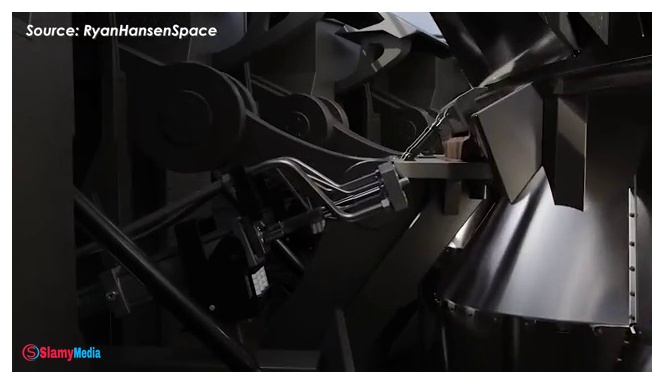
swing into position and lock onto structural points at the base of the booster. Their job is simple, but absolutely vital. They hold the booster down. Even as the Raptor engines ignite and generate thousands of tons of thrust, these clamps keep the vehicle firmly in place. They prevent it from lifting off prematurely. The clamps typically hold until around T-minus 11 seconds, or possibly all the way to T-0, depending on the updated design. Then they retract extremely fast, clearing the way for lift-off. So, any modification to this system is a big deal. And it could very well be part of the final preparations for the upcoming full static fire. Beyond booster 19, ship 39 is now entering its most intense phase yet. After successfully completing a full cryogenic test, S-39 returned from Massies on March 8th, opening the door to the next and far more exciting stage. Just over two weeks of careful inspections later, things suddenly shifted into high gear. Engine installation is now in full swing. Recent images and footage from March 22nd show a Raptor vacuum engine being transported into Megabe 2. Then, just two days later, another one followed. Based on the size and shape, these are clearly vacuum-optimized engines for the upper stage. But those are just the ones caught on external cameras. It's still unclear whether all six engines have already been installed. And you might be wondering, why not bring in all six at once and get it done faster? The answer is precision. Each Raptor engine, especially the R-VAC, with its large and delicate nozzle, has to be aligned with extreme accuracy. It needs to match perfectly with the propellant lines, liquid oxygen and methane, the electrical systems, the gimbal actuators for sea-level engines, and the structural mounting points at the base of the ship. Rush this process or skip proper checks, and you risk propellant leaks, mismatched vibrations,
Article Image 3
or even failures during static fire. So, the process is methodical. The engine is rolled into the bay, using specialized transport equipment lifted into position, aligned, bolted down, connected to plumbing, then goes through leak checks and alignment verification before moving on to the next one. And since ship 39 is the first version three vehicle space X is being even more cautious. Each new Raptor, three engine, with its internal upgrades and simplified design, is being validated step by step before committing to a full six-engine configuration. It's all about minimizing risk before that first full static fire. And speaking of static fire, there's a strong chance ship 39 could run that test as early as this week. The reason the FAA has already issued a no-tom active from April 3rd through April 14th, 2026, along with the temporary flight restriction extending up to 10,000 feet over the masses area. Now, here's the interesting part. In the past, they typically only needed a TFR of around 5,000 feet. So doubling that ceiling isn't random, it likely signals that the FAA is starting to fully account for just how powerful a Starship version three could be. And they're expanding safety margins to cover any potential risk scenarios. And there's more. If anyone was still wondering where ship 39 might perform its static fire, SpaceX may have just given us a pretty big clue. On the night of March 28th, they rolled out a brand new Starship cryo and thrust simulation stand to masses. This thing is massive, seriously massive. Built with a four-legged support structure, it looks like it's designed to handle some extreme loads. Most likely this stand will be used for fit checks ahead of the static fire campaign, making sure everything lines up perfectly before ignition. And if that's the case, then all signs are pointing in one direction. Ship 39 is getting very, very close to
Article Image 4
firing up. For the first time, the ship is expected to fire all six engines right from the start, generating over 1,700 tons of thrust. This will also mark the first real-world test of the Starship FIAI-3 configuration and the first official use of the upgraded masses test systems, including the new quick disconnect hardware designed specifically for this new generation. A successful static fire would clear ship 39 to head back to Megabay in early April for final integration. That includes installing the FTS. And speaking of that system, something interesting happened on the 25th. People spotted a white truck delivering what looked like extremely hazardous cargo to SpaceX. It was later identified as a batch of explosives specifically prepared for Starship's flight termination system ahead of flight 12. So what exactly is the FTS? Think of it as the rocket's built-in self-destruct button designed purely for safety. If Starship or the super-heavy booster runs into a serious issue, loses control or poses a risk to populated areas or restricted airspace, the system kicks in instantly. Once activated, small explosive charges placed along the vehicle detonate in a fraction of a second. The goal is simple. Break the rocket apart mid-flight into smaller pieces instead of letting a fully intact vehicle continue on an uncontrolled path. It's a last resort measure, but a critical one. Because without it, a single failure could turn into a much larger danger for people and property on the ground. In short, ship 39 is moving fast and it's entering a critical window. Right now, all eyes are on Massey's waiting for the next update. So, are you hoping flight 12 happens soon? Drop your prediction for the launch date in the comments. I'll go first. April 21st. How about you? Many people are predicting that the 20th will be the actual launch date.
Article Image 5
Exactly on this day, in 2023, SpaceX conducted Starship's very first full-stack flight test. So, there's a strong chance flight 12 will launch on this anniversary. It's going to be an exciting day for sure. If you want to stay updated with the latest news, don't forget to subscribe to the channel. We'll keep you posted regularly. And right now, NASA is quietly counting down toward Artemis 2. Out there in Florida, under the heat and constant coastal winds, something feels different. If you ever find yourself near the restricted zones at Kennedy Space Center, you'll notice it right away. It's not just the heat coming off the launch pad. It's something else. A kind of pressure building, the energy of four people about to step into history. Because this mission marks a shift. A moment where diversity and modern technology begin to replace the more uniform image of the Apollo era. Just picture the crew. Leading the mission is Commander Reed Weismann, a former fighter pilot with 27 years of experience, a former chief of the astronaut office and a veteran of the ISS. Right beside him is Victor Glover, the pilot of Orion, a naval aviator who flew in demanding operations like a rocky freedom before becoming the first black astronaut to complete a long duration mission aboard the space station. But what really makes this crew stand out is Christina Koch and Jeremy Hanson. Christina is more than an electrical engineer, more than an Antarctic researcher. She holds the record for the longest single space flight by a woman 328 consecutive days in orbit. And then there's Jeremy Hanson, representing the Canadian Space Agency. He hasn't flown to space yet, but he's an aquanaut, someone who has lived and worked deep beneath the ocean. And soon he'll become the first Canadian to reach the vicinity of the moon. This lineup isn't random. NASA is sending a clear message. Artemis is for everyone. It reflects how much the world has changed in the last 50 years.