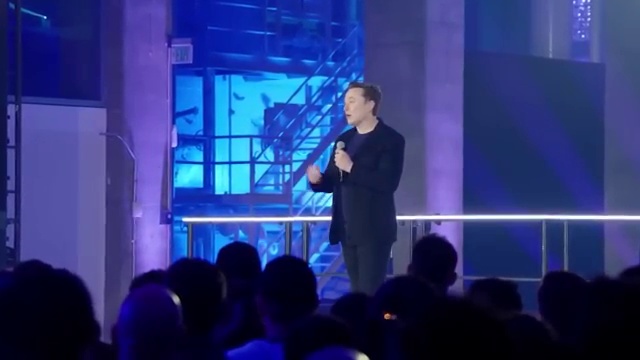
In this week's episode, Elon Musk pulls back the curtain on his most ambitious project yet, the Tesla semi-teases its secret weapon, and NURLINK's 18th patient shares a deeply personal account of his experience with the brain implant technology. Forget the scale of the original Gigafactory, forget the audacity of Starbase. Elon Musk walked onto a stage at the Seahome Power Plant in Austin to officially launch the TerraFab, a vertically integrated semi-conductor powerhouse designed to print brains at a scale far beyond anything built today. Musk has taken us inside his new master plan for a $25 billion joint venture between Tesla, SpaceX, and XAI that is aimed at achieving an annual computing power output of one TerraWat. To put that in perspective, the entire global AI chip industry combined currently produces roughly 20 gigawatts of compute. If Tesla hits this target, the TerraFab will outpace the collective output of the entire planet by a factor of 50. The story of the Tesla TerraFab begins with a fundamental problem in how the world makes silicon. Right now, semi-conductor manufacturing is a fragmented, global relay race. A chip might be designed in California, fabricated in Taiwan, and then shipped Malaysia for packaging and testing. Every single handoff is a potential failure point. Every border crossing introduces weeks of delay in the race for artificial general intelligence, those weeks are an eternity. Elon addressed this directly during his speech at the launch event, saying, I can't emphasize enough the importance of being able to make a chip, test it, change the design, do another one, and have that all in a single building. By bringing design, lithography, fabrication, and advanced packaging into one tight, vertically integrated system, Tesla can iterate on hardware as fast as they iterate on software. Right now, Tesla is one of the largest customers for giants like TSMC and Samsung, but as Elon noted, even these Titans have a maximum rate at which they're comfortable expanding.
Article Image 1
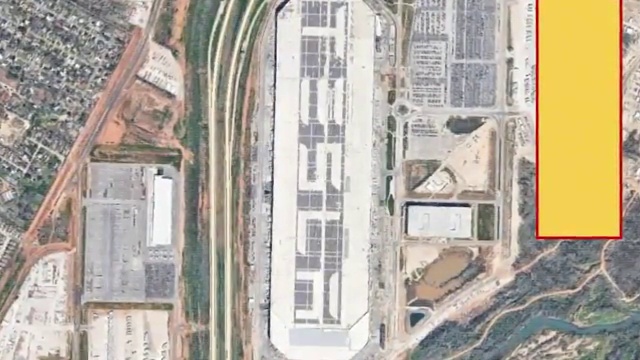
Even if Tesla, SpaceX, and XAI commit to purchasing as many chips as they are able to produce. Elon put it straight in his remarks, we either build the tariffab or we don't have enough chips, we need the chips so we're gonna build a tariffab. One of the most revealing parts of the tariffab launch event was the clarification of what this factory will actually produce. Unlike conventional chip factories, the Tesla tariffab isn't trying to build everything for everyone, instead it will be split into two dedicated fabs, each focused on a single, highly optimized chip architecture. The first is Tesla's inference chips like AI5 and AI6, which live inside the company's vehicles as well as the Optimus humanoid robots. These products are all built at very high volume with Elon estimating that the CyberCab alone will outnumber all of Tesla's vehicles today and Optimus robots being made in the billions. The second chip is where things get wild, the D3. The D3 is a high power, radiation-hardened processor designed specifically for the vacuum of space. Here is the number sending shockwaves through the industry. According to Elon, 80% of the tariffab's total compute output is destined for Earth orbit. Only 20% is staying on the ground for cars and robots. Elon's vision is to move the brain of the global economy into space. He explained that solar energy is five times stronger in orbit and the vacuum of space provides a near infinite heat sink for massive data centers. In a way, the tariffab is the engine that will power SpaceX's orbital data center plans, which include a constellation of 1 million AI satellites in orbit. For months now, the Tesla community has been watching drone footage from Joe Tetmire showing a massive new plot of land being prepared for construction at the Gigafactory Texas complex. Estimates from industry watchers suggested that the structure plan for the area would be almost comparable to the size of Gigatexus' main factory. During the announcement, Tesla featured a render of a building in the location seemingly confirming speculations that the building in
Article Image 2
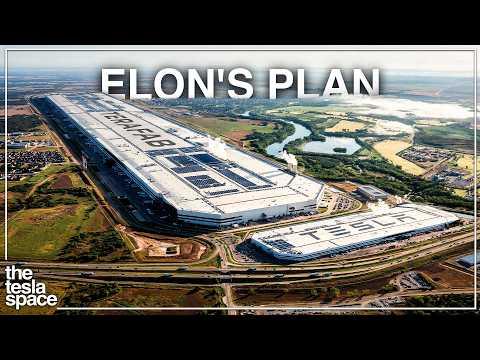
Elon's presentation was the tariffab. Elon later cleared up the mystery on X and it completely reframed the scale of the project. As it turns out, that massive building in his presentation is just a little advanced technology fab dedicated to rapid prototyping. The actual full-scale tariffab is something else entirely. Elon replied saying we couldn't possibly fit the tariffab on the Gigatexus campus, it will be far bigger than everything else combined there. In a later post on X, Musk confirmed that the tariffab will probably span about 100 million square feet. To help you visualize, the tariffab will be 10 times larger than Gigatexus and over 30 times larger than Apple's spaceship headquarters. In terms of pure square footage, it will be comparable to three of the world's smallest sovereign states, Vatican City, Monaco and Gibraltar, combined. This facility is being designed to handle one million wafer starts per month that would represent roughly 70% of TSMC's total global output coming from a single campus. We are only a few months into 2026 and every headline makes it sound like AI is coming for your job. But we've seen this before. Taukeleaders didn't replace mathematicians, they let them solve bigger problems. Excel didn't replace accountants, it made them exponentially more powerful. AI is that kind of shift. It's not here to replace you, it's here to amplify you, and the people who learn to use it early gained the edge. That's why I want to tell you about outskill. They are running a completely free two-day live AI mastermind where you'll learn how to build AI agents, automate repetitive tasks, and connect tools like sheets and notion into real working systems. It's practical, it's hands-on, and it's built to make you more valuable, not replaceable. The first 1000 people can grab a free seat with a 100% discount, plus over $5,000 in bonuses if you attend. If you want to stay competitive in an AI-powered world, don't fear the tool, master it. Click the link at the top of the description and grab your
Article Image 3
free seat today. Now, if the scale of tariff abs sounds like science fiction, it is worth looking back at a moment in Tesla's history that felt exactly the same. In February 2014, Elon Musk announced that Tesla would build to the world's first gigafactory in the Nevada desert. At the time, the mainstream media and the auto industry reacted with a mix of confusion and mockery. The skepticism was rooted in a very simple fact. In 2014, Tesla was barely a car company. They were producing about 30,000 model S sedans a year. That was it, one car. Yet Elon announced they were building a factory to produce 35 gigawatt hours of battery cells. To put that in perspective, that was more than the entire global production of lithium ion batteries for every laptop, phone, and camera on earth combined. Critics called Gigafactory 1 a bridge to nowhere, but they didn't realize that Tesla wasn't building for the model S. They were building the infrastructure for a car that didn't even have a prototype yet, the Model 3. The Gigafactory had to exist before the mass market car was even possible. And we all know how the Model 3 became the world's most successful EV as soon as it reached scale, at least before it was outsold by its successor, the Model Y. Fast forward to today and we are seeing the exact same pattern. Tesla isn't building the TerraFab just to run full self driving's current fleet. They are building it because you cannot have a world with billions of optimist robots, millions of robot axes, and a million satellites in space if you are waiting in line for chip allocations from an external supplier. In 2014, the bottleneck was batteries. In 2026, the bottleneck is brains, and the TerraFab addresses that. When you look at the raw numbers for Elon Musk's aspirational projects, the TerraFab becomes a mathematical inevitability. During his speech, Elon stated that SpaceX has the potential to deliver 10 million tons to orbit per year with Starship. At the same time, Tesla is aggressively building up its internal capacity to produce a terawatt of solar panels annually. If you have the lift capacity to move the mass and the energy to power it, one thing is still missing. You need the compute to run the intelligence at that same
Article Image 4
scale. This is exactly where the TerraFab comes in. It's the missing piece of the puzzle, and in true Elon Musk fashion, the TerraFab is not the end all be all either. During the closing moments of the TerraFab launch event, Elon clarified that achieving a TerraWatt of compute is just the first step, going past a TerraWatt of compute requires something even more ambitious, an electromagnetic mass driver on the moon. This idea is actually not that crazy since the moon's low gravity and lack of atmosphere will be perfect for launching satellites directly into space without using rockets. This would effectively drop the cost of launch to just the price of electricity, according to Elon. This is how the world will achieve PitoWatt scale computing. That's the equivalent of 1000 TerraFabs, and we actually did a complete video of what this might look like on our Space Race channel, which we've linked in the description below. One of the most surprising moments in J. Lano's garage this week wasn't actually about the semi's 1000 pound weight reduction. It's new 48-volt architecture, or even its updated exterior design. It was about the future where the truck never needs to be plugged in at all. During the episode Tesla's semi-lead Dan Priestley and design chief Franz von Hulshausen described a new system the company is already working toward, automated, conductive charging. Concept is essentially a drive over pad for the Tesla semi. A driver pulls into a spot, parks the truck, and charging begins automatically with no cables. By making charging a background task, Tesla is aligning the semi's tech with the way the industry actually operates. You see, the semi is already capable of charging at 1.2 MW, recovering 60% of its range in just 30 minutes. But as Priestley noted, the goal is for that charging to happen exclusively during a driver's mandatory 30-minute rest break. In Longhall trucking, those breaks are a legal and safety requirement to prevent fatigue. By removing the friction of stopping to refuel, Tesla is ensuring that the truck refuels while the driver rests never the other way around. This ties directly into Tesla's trademark obsession with safety.
Article Image 5
Heavy-duty trucks are involved in a disproportionate number of fatal accidents every year, often due to human error and fatigue. When you combine a vehicle designed around rest cycles with the latest full-self-driving software, the semi begins to look less like a truck and more like a safety system. Eventually, a driver will simply pull in, park, take their required break, and leave with another 300 miles of range without ever handling a piece of equipment. This week, a NERLINK user P18 shared a detailed reflection on his first 100 days with the N1 brain computer interface. His name is John L. Noble, a British Army veteran and former paratrooper who was paralyzed below the neck following a C4 spinal injury. His last three months sound like science fiction that has become everyday reality. The process began with a surgery that Noble described as surprisingly straightforward. Using NERLINK's robotic system, Surgeons placed in 2024, ultra-thin threads into his motor cortex. He was discharged from the hospital the very next day. He went on to say recovery was genuinely minimal, I felt sharper and more positive than I had been in years after the BCI was turned on. The real transformation, though, began in the second week when the system was paired with a MacBook. Within minutes of calibration, Noble was moving a cursor using nothing but his thoughts. He admitted that at first moving his MacBook's cursor using his mind felt like trying to remember a dream, but by the third week scrolling, clicking and typing had become second nature. By day 80, Noble decided to test the limits of the inference by firing up World of Warcraft. He described the first raid as clunky, but once his brain and the BCI synced, he was exploring Azeroth at full speed with just his mind. He called the experience, honestly brilliant, noting that the sense of digital freedom is addictive. This update is significant because it helps move NURLINK out of the realm of future potential and into the category of proven utility. As Noble put it, the N1 didn't just give me a new way to use a computer, it gave me a new way to live.