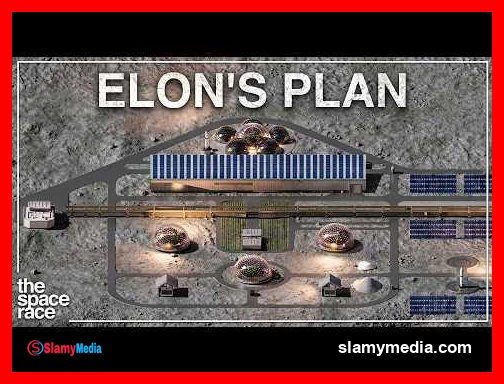
By now, you've probably seen Elon Musk's announcement. SpaceX has already shifted focus to building a self-growing city on the moon. And the reasoning behind that shift is simple. You can build a moon base in 10 years that will be hard, but it's not impossible, while building a city on Mars would take at least 20 years, probably more if it's even doable at all. Which realistically, there's always been a good chance it just doesn't work in everyone dies. Elon himself has admitted this in no subtle terms on many different occasions. Now that's not to argue that the moon is entirely safe, but we know that if you get sick or injured on the moon, you can come home. While the journey to Mars, that was always going to be a one-way trip. So we might know why this is happening, but exactly what is about to happen is going to look more like science fiction than anything NASA has ever dreamed up. What is a self-growing city on the moon? Well, if you've been following this story for any amount of time, you'll probably recognize that this is one of many statements from Mr. Musk that is designed to be highly provocative yet purposefully vague. It's like Tesla's new mission statement to build a world of amazing abundance. Sounds cool, but what does it really mean? That's open to interpretation. Though the self-growing city terminology does give us a pretty solid hint in the direction that this is all going. AI, automation, and robots. So it's probably not a coincidence that SpaceX just purchased an entire AI company, one that just happens to also be owned by Musk. XAI itself also owns the social media platform X and is best known for their multi-talented AI language model GROC. And strangely enough, it's actually through XAI that we've learned more specific details about what Elon plans to build on the moon. The first thing will be satellites. SpaceX now plans to build satellite factories on the lunar surface equipped with a radical
Article Image 1
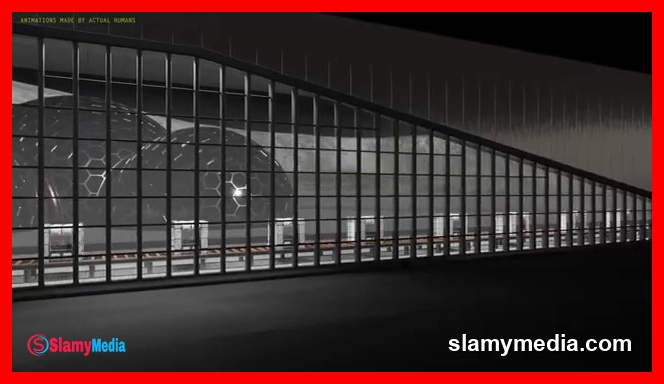
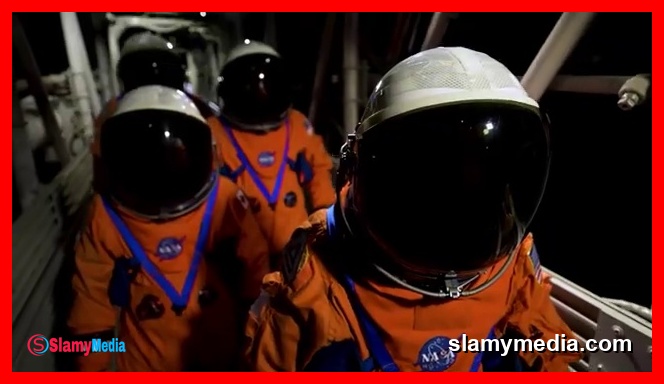
invention that will launch them into orbit. But these are not satellites like Starlink or anything else we know today. This lunar factory will produce orbital data centers for running super-advanced AI models on Earth, and to make those satellites they'll be using resources harvested from the moon itself. Now, this still doesn't tell us why SpaceX has to go to the moon to build AI satellites. Because what SpaceX is trying to do here is to solve the hardest part of the equation, which is moving a satellite from the ground to space. This is the most important part of SpaceX and XAI's plan for the moon. To move those satellites from the surface and into Earth orbit, SpaceX will build something called a mass driver, also sometimes referred to as a rail gun. It works kind of like a train engine on a track. It accelerates an object to escape velocity and then flings it out into space using energy from powerful electromagnets. It's actually not that different from the technology that allows an electric car to launch from 0 to 60 in 2 seconds. And guess what? Musk has some experience in that field already. Because the moon is much smaller than the Earth, it has no atmosphere to create wind resistance. It therefore has a relatively low escape velocity, which is the speed required to overcome gravity. On Earth, that speed would be 11.2 kilometers per second, but escape velocity from the moon is a mere 2.38 kilometers per second. For anyone trying to do the math, that's still over 8600 kilometers per hour. So while this is similar to an electric car in theory, it's still the biggest, most powerful electric vehicle ever conceived. Regardless of that challenge, though, it would still be so incredibly easy to reach space from the moon when compared to the massive complications of launching from Earth. From the moon, you don't actually need rockets or fuel or any kind of hardware that consumes resources and requires maintenance. It's all reduced down to magnets, a big steel rail, and electricity. Now this is all cool, but who's going to build all of this crazy stuff on the moon? Well, it's not going to be guys in spacesuits, that's for sure.
Article Image 2
It's going to have to be robots. And we also know where those robots are coming from. That's Optimus, the Tesla bot, and it is working toward being able to accomplish one key thing to make building on the moon a reality. You see, building on the moon has a major challenge, because we can't bring the Earth along with us no matter how hard we try. Let's use the Apollo missions as our example. The Saturn V moon rocket. It stands as one of the most powerful machines ever created by human beings. It towers over almost every other rocket in existence, and this is the payload that Saturn V was able to deliver onto the surface of the moon. The lunar module. Just barely enough hardware to land a pair of astronauts, keep them alive for three days, and then blast them back off into space. One of the lofty goals that Musk has recently spoken about for the Tesla bot is achieving a level of self-replicating technology that works in a very similar way to the old sci-fi concept of the von Neumann probe. If you're not familiar, the idea is to make a spacecraft that would be able to explore the galaxy at slower than light speed over the course of millions of years. Of course, no one machine could possibly operate for that long, so the von Neumann probe would land on the first stable planet it encountered and deploy an automated, robotic factory that would begin harvesting raw materials from the new planet and constructing new space ships. Then the replicated ships would go off in all directions and find their own planets to set up shop and build more space ships, and on, and on, and on, until the von Neumann probes have spread throughout the entire galaxy. That's what people are always hoping to discover when one of these interstellar objects is spotted in our solar system, like 3i Atlas. It's the potential to see an ancient alien probe in action, although as far as we can tell, it always turns out to be a weird rock. But that concept applied to Tesla's optimists would be more than just robots building robots, it would be robots mining ore, making plastic building electric motors, fabricating new microchips, all on their own without any need for human intervention. Now when we go back to that term self-growing city, we are beginning to really understand
Article Image 3
what Elon is hinting at. This is a lot more than just building on the moon, this is a full supply chain from mining to manufacturing. The point being that if anyone thinks we are going to build this satellite factory and the master-river system on the earth and then ship it to the moon on a rocket, that is just not going to work out, even with SpaceX providing the muscle for this whole operation in the starship. Which is the one thing SpaceX has that no one else in the world could possibly build. It's the first super heavy lift rocket, orbiter and lander combination that is also fully reusable, meaning that not only will starship carry more stuff into space than any other rocket, but it can also return to the earth, land, refuel, and launch again. Or it can refuel while still in earth orbit, fly to the moon or Mars and then land there as well. And that's not even the end of this rocket's usefulness. This is the idea at least. In practice, we've seen various starship prototypes complete some very impressive milestones over nearly three years of operation. We've seen 11 of them launch, a few of them land, and two that were able to deploy a small payload in the space. But we've also seen a lot of starships just blow up in midair. So, even through a very optimistic lens, this is still very much a work in progress, and that is fine. Musk isn't trying to say that starship will land on the moon this year, but he does think it'll land next year. And that is still a very ambitious goal, but let's cut the guys some slack and say it's not impossible. In addition to being incredibly powerful, the starship does have another big advantage that other rockets just can't provide, which is to say that it can serve a dual purpose. The starship itself is essentially a big, stainless steel tube that gets filled with cargo and propellant. When it lands on the moon, all of the propellant will be used up and all of the cargo will be unloaded. That leaves us with an empty metal tube that is 9 meters wide and about 60 meters long, and this is starting to look like the framing for a pretty spacious human habitat. Just one hollowed out starship would offer about as much internal volume as the entire international space station, which itself is essentially a series of connected metal tubes.
Article Image 4
Now there is still some work that needs to be done, because if you were to just set up camp inside a used cargo starship, then there's only about 3 millimeters of stainless steel, separating you from the exceptionally deadly environment of the moon, which is not good. So we do have to go the extra mile of burying the ship in lunar soil to create a thick layer of insulation. That is going to protect against radiation, regulate temperature, and act as a shield against any small meteorites that are likely to fall on us. Okay, so we've got a cool place to live, but we didn't go to the moon to just hang out inside all the time. So we need to get around, and of course SpaceX is going to have an answer for this as well. Also borrowed from their friends at Tesla, the Cybertruck. Can't sell them on Earth, might as well start launching them into space. Of course, you wouldn't actually want to just send a normal Cybertruck to the moon, that's way overbuilt for a moon rover, and the design of the truck as it is would not work even for a second. Fluids would boil off, rubber tires would explode, it would be a mess. But the basic concept of the Cybertruck is sound, and it could just be the key to unlocking the potential of the moon. NASA used electric vehicles on the moon back in the 1970s, and they worked great with the technology of the era, so obviously Tesla can do a lot better in this day and age. The driving range of those old Apollo Dunebuggies was a little less than 100 kilometers on a non-rechargeable battery, which is actually pretty impressive for the time, so just imagine how far we could go today on a single charge. Tesla's autonomous driving AI would also play a huge role, now we can have these vehicles moving around robots and loads of raw materials without any humans needing to get involved. That gives people more time to focus on the important things, like science and exploration. Now at the heart of this self growing city needs to be energy, a lot of it. There is a humongous difference between powering a small human outpost and operating a massive AI satellite factory and mass driver system, and that energy will come from the sun. One of the many big changes that Elon has made recently to both the Tesla and SpaceX business model is to prioritize the manufacturing of solar panels, but not just any solar panels.
Article Image 5
You see right now, almost every solar panel in the world is made in China, and that's a problem for an American company like SpaceX, because while solar panels are actually fairly cheap to build, markups and incredibly high import tariffs make them fairly expensive to buy. So Musk has directed both of his largest companies to build their own solar panels in the USA, and he set the goal of producing 100 gigawatts per year of solar capacity. For scale, 100 gigawatts is about one-fifth of the current United States electricity generation, so in 5 years of manufacturing at that scale, Tesla and SpaceX would have enough solar panels to power America all on their own. But that's not what they're going to do. Elon's plan for the majority of that solar production is to launch it into space. Every single one of those AI data center satellites is going to need a massive array of solar panels to run the supercomputers within. Plus, there's the factory that builds them and the mass driver that launches them. This will also need an incredibly large collection of solar panels. So is it even possible to make enough of them? Well, one thing that Musk points out is that a solar panel made for Earth and one made for space can be very different products. Most of what we consider to be a solar panel is the heavy glass and metal case that holds the photo cells and protects them from the elements. There's no weather in space or on the moon, so you don't need all of that. The worst case scenario would be that a panel gets hit with a space rock. And in a world where solar cells are cheap and abundant, you would simply just change it out for a new one, no big deal. And if anything, this actually sheds some light onto what Tesla means when they say things like amazing abundance. It doesn't mean cyber trucks everywhere, it means that when energy is cheap and labor and transportation are automated, then you can essentially build anything and humans are only limited by our ability to invent. So yeah, we can build a city on the moon and then we can go to Mars and do the same thing. Here's another video all about what that might look like.