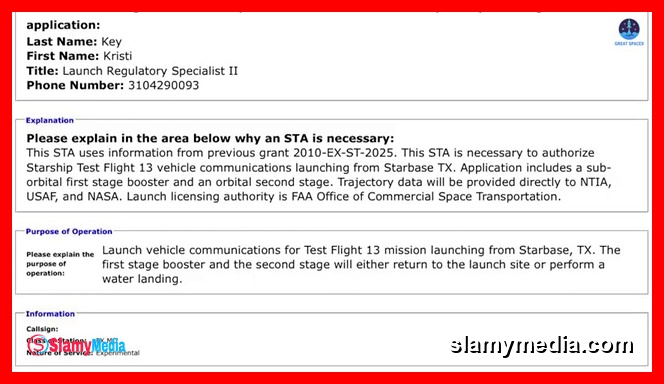

When will it finally reach orbit? That is the gargantuan question currently looming over starship, the vehicle that Elon Musk has always proudly described as the largest flying object ever constructed by human hands. After months of intense anticipation, nail biting delays and a fair share of spectacular fireballs, it feels as though we are finally standing on the precipice of that historic moment. So when exactly will it happen and how is the team at SpaceX preparing to turn this ambitious dream into an orbital reality? We're also going to dive in on the latest moves from Blue Origin as they prepare for the new Glenn3 launch and continue to develop their sophisticated lunar infrastructure. Welcome to another deep dive only on Great SpaceX. Starship is currently in its V3 iteration, a phase that marks a significant leap in technological advancement for the platform. More importantly, we have officially moved into 2026, which is a critical year of preparation before the high stakes races for crude lunar landings truly begin. One of the overarching goals for this calendar year is to finally get a starship into a stable orbit. It's a bit of a sobering thought to remember that across its 11 experimental flights so far, starship has technically never achieved orbit. Even the upcoming flight 12, despite its massive upgrades, might still stick to a high altitude suborbital trajectory to test its thermal protection systems. But the real change is visible on the horizon. Recent FCC permits have pulled back the curtain on SpaceX's near term roadmap. The agency recently revised the permit for flight 12 and more interestingly, published the initial permit for flight 13. Within the explanation section of the flight 13 documentation, there is a massive shift in strategy. It's no longer described as a suborbital flight for both stages.
រូបភាពទាក់ទងនឹង SpaceX finally Announced First Starship Orbital Flight! Sooner than You think… (1)
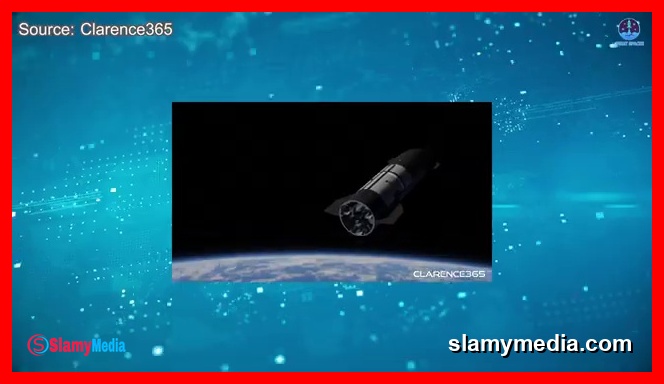
Instead, the permit indicates that while the first stage booster will remain suborbital, the second stage ship is slated to finally reach orbit. This would be the second official flight of the V3 hardware following immediately on the heels of flight 12. To understand why this is such a massive deal, we have to look at the standard of the space industry. In the world of aerospace engineering, reaching orbit is the ultimate litmus test. You can have the shiniest rocket, the coolest mission patches, and the most followers on social media, but none of it truly matters until you can maintain a stable orbit around the earth. Once a vehicle reaches the standard, it has officially entered the space race. We can look at Blue Origin to see exactly how heavy that orbital pressure can be. Despite being a massive company with world-class talent, they were heavily ridiculed for years because they hadn't yet put a payload into orbit. Reaching that gateway changes the entire narrative of the program. Furthermore, reaching orbit unlocks the full potential of the starship architecture. The vehicle is designed to go far beyond our backyard, targeting distant worlds like Mars and the asteroid belt. To do that, it first has to master Earth orbit, where it will eventually support the construction of massive satellite constellations like Starlink and Kuiper, aka Amazon Leo. It also needs to perform specialized orbital tasks such as cryogenic refueling, which is basically a high-speed gas station in space, which is like having a high-speed gas station in space, and the complex maneuvers required to fly back to starbase for a pinpoint landing. All of these advanced goals are locked behind the orbital door. If SpaceX pulls this off, the payload capacity of the new starship could be fully realized, allowing it to carry hundreds of tons in a single go. We're talking about the potential for complete reusability on a scale never before seen
រូបភាពទាក់ទងនឹង SpaceX finally Announced First Starship Orbital Flight! Sooner than You think… (2)
in the industry. Reaching orbit at this specific junction is also about keeping pace with the competition. Starships like NASA's SLS, ULAs Vulcan, and Blue Origin's New Glenn have all successfully reached orbit despite their own share of developmental hurdles. Even on the other side of the globe, China's Ju Chui, a methalox rocket that shares some striking similarities with Starship's design philosophy, has already achieved orbital status. Starship needs to prove its leadership potential sooner rather than later to remain the king of the mountain. So when can we expect this historic flight 13 to take off? According to the FCC license, the official operation date is set for May 29th of 2026. Now, if you have followed SpaceX for more than 5 minutes, you know that they rarely launch on the very first day a permanent allows. In the world of Elon time, a May 29th start date usually translates to a launch window opening in June. We should probably expect a future additional countdown of boards or weather delays just to keep our heart rates up. An interesting detail in the permit involves the landing procedure. In the purpose of operation section, the FCC notes that both the booster and the ship will either return to the launch site or perform a water landing. This leaves the door open for a potential landing at Starbase, likely for the booster, which we have all been dying to see. However, given that flight 13 is a first time orbital attempt for the ship, it's very likely that SpaceX will opt for a safe ocean splashdown for both stages. This allows the vehicle to use every drop of its propellant to push the orbital boundaries as far as possible without worrying about the fuel reserves needed for a precision return to the launch pad. It simplifies a very complex mission, ensuring the primary goal, which is orbit, is achieved without unnecessary risks. Of course, to get to flight 13 SpaceX first has to survive flight 12, which is currently targeted for May. The primary mission of flight 12 is to stress test the new V3 upgrades and ensure that
រូបភាពទាក់ទងនឹង SpaceX finally Announced First Starship Orbital Flight! Sooner than You think… (3)
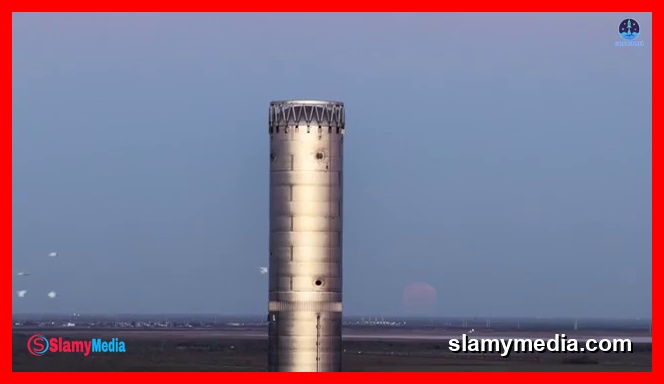
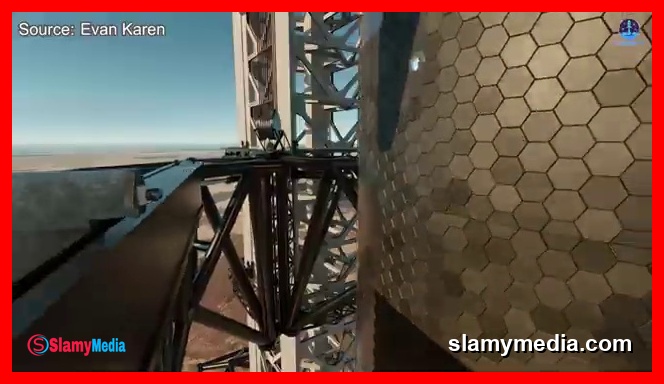
the platform is stable enough for more ambitious goals. This demand for perfection is likely why we have seen so many delays lately. Originally, this flight was paged for January, but the failure of B18 sent everyone back to the drawing board. Since then, the preparations have been methodical and, frankly, a bit slow. Each check and recheck takes weeks. While this creates immense time pressure for the rest of 2026, SpaceX seems to believe that a slow, successful mission is better than a fast failed one. If they launch in May, they only have 7 months left in the year to tackle orbital landings, payload deployments, and refueling tests. It's a packed schedule to say the least, but the hardware for flight 13 is already looking promising. Ship 40 has been stacked for quite a while and is sporting a full complement of heat shield tiles. B20 is also near completion with its final sections, including the hot staging ring and the forward section, finally making an appearance. It looks like the hardware is ready to roll the moment, flight 12 clears the pad. Speaking of the pad, the launch system at Starbase is also undergoing a bit of a makeover. Since this will be the first attempt at a launch from the new pad to SpaceX is being extra cautious. We recently saw the team attaching giant orange water bags to the launch tower arms or the chopsticks. For those who aren't familiar with heavy construction, these bags are used to test the load bearing capacity and durability of the arms. It's basically like giving the launch tower a heavy duty workout at the gym to make sure it can handle the weight of a fully fueled Starship without breaking a sweat. Looking even further ahead, SpaceX has to plan the orbital route for Starship. Once it reaches orbit, the traditional landing zone in the Indian Ocean might become a thing of the past. Instead, the team might target the Pacific Ocean, which actually brings the ship much closer to the Texas coast. If they can stick a landing in the Pacific on flight 13, it opens the door for a landing off the coast of Texas for flight 14 and potentially a full blown catch at Starbase by flight
រូបភាពទាក់ទងនឹង SpaceX finally Announced First Starship Orbital Flight! Sooner than You think… (4)
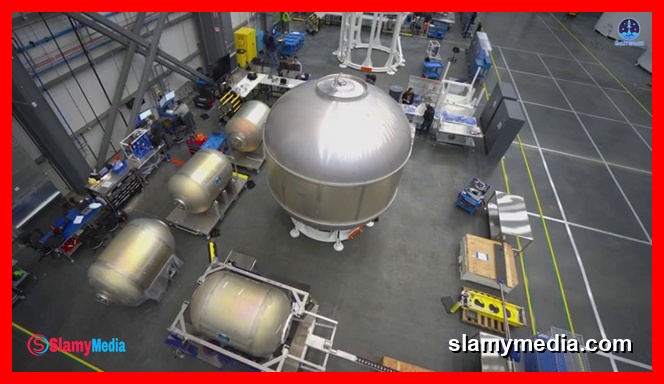
15. However, changing flight paths involves a mountain of international licensing and diplomacy. As the route would likely pass over parts of Southeast Asia or Oceania, it's a logistical headache that only a company like SpaceX would willingly take on. Now let's shift our focus to Blue Origin. A company that has been making some massive strides of its own recently. They are currently targeting a launch for New Glenn 3 as early as the 10th of April. To prepare for this, the team recently moved two major pieces of hardware into their factory for final integration. CEO Dave Lymph shared an update on April 7th confirming that the stack is complete. In a nod to Star Wars, he noted that, never tell me the odds is back, and the team has refurbished and certified a flight proven booster for the upcoming mission. Despite the looming launch date, we haven't seen much movement toward the pad yet. Because this is a reused booster, and the second stage underwent extensive hotfire testing earlier, Blue Origin might be planning to skip the traditional pre-launched static fires and go straight for the ignition. It's a bold move. It shows a growing confidence in their hardware. This flight is particularly significant because it aims to achieve booster reuse on only the third flight of the New Glenn program, something that took SpaceX years to master. If they pull it off, it will be a major validation for team Blue's philosophy. Beyond their immediate launch goals, Blue Origin is also playing the long game with their lunar program. Strawling inspired by the momentum of Artemis II, they have been showcasing a steady stream of progress. On April 6th, they released images of two BE7 engines, which are the high performance power plants designed for the Blue Moon Lander. One of these engines just finished acceptance testing and is headed to Lunar Plant 1 in Florida. These dual-expander cycle engines are the key to making lunar exploration sustainable and reliable. The production of the Blue Moon Lander is also picking up speed. A Mark 1 prototype is slated to launch later this year, likely on a New Glenn 4 mission. A second prototype is also in the works, and we've already seen glimpses of its aft,
រូបភាពទាក់ទងនឹង SpaceX finally Announced First Starship Orbital Flight! Sooner than You think… (5)
module, and fuel tanks. This second version is expected to play a role in a test docking mission with an Orion capsule about three years from now during the lead up to Artemis III. But Blue Origin isn't just building landers. They are building an entire ecosystem for living on the Moon. They've introduced a concept called Lunar Permanence, which is essentially a plan to live off the land. Instead of hauling every liter of oxygen and every kilogram of building material from Earth, Blue Origin wants to extract these resources directly from the lunar regolith. They've even showcased a system called Air Pioneer that uses a specialized reactor to melt lunar rocks and extract breathable oxygen through electrolysis. It's a wildly ambitious plan that would introduce the production of iron, aluminum, and silicon on site, drastically reducing the cost of building a permanent lunar base. It's clear that Blue Origin is positioning itself as a vital partner for NASA's long-term lunar goals. However, to deploy these massive resource extraction systems, they will likely need more than just their own rockets. They will likely near the sheer lift capacity of a vehicle like Starship to get the heavy equipment to the surface. It's a fascinating dynamic where the two biggest rivals in the industry might eventually have to rely on one another to make the Moon a permanent home for humanity. That brings us to the end of today's deep dive into the state of the space race. We have Starship on the verge of its orbital debut, a new era of booster reuse at Blue Origin and the promise of living off the land on the lunar surface. It's a truly incredible time to be watching the stars. Which milestone are you most excited for? Is it the first orbital Starship or the first successful reuse of a new glen booster? Let me know in the comments down below and don't forget to respond with orbit now if you're ready to see SpaceX make history. Thanks for tuning in to Great Space X. I'm Kevin and we truly appreciate your support as we track these historic missions. If you enjoyed this update, please like, subscribe, and turn on notifications so you never miss a beat. Until next time, keep your eyes on the horizon and keep looking up.