Imagine a city that thinks, responds, and adapts in real time, where traffic moves smarter. Energy is used more efficiently, and everyday life feels seamlessly connected. That's the world of smart city technologies, and it's already changing urban life faster than ever before. From intelligent transport systems and autonomous vehicles to advanced energy networks and automated services, these innovations are transforming how cities function at every level. In this video, we'll explore the powerful technologies reshaping modern cities and how they're building a more efficient, sustainable, and connected future for everyone. Dopple-Mire Garaventa High above the chaos of traffic, a new kind of city transport is quietly changing how people move every day. Developed by the Dopple-Mire Garaventa group, these aerial systems are turning open sky into efficient transit space. With thousands of installations worldwide, including gondolas, cable cars, and funiculars, this technology is no longer limited to mountains or tourism. It's becoming part of everyday urban life. Instead of adding more vehicles to crowded streets, passengers glide smoothly over roads, rivers, and dense neighborhoods. The system runs continuously, offering reliable movement with minimal delays. What makes it even more impressive is its low environmental impact, using less energy and requiring far less ground construction than traditional transport. As cities grow and congestion worsens, solutions like this are redefining mobility by lifting transportation into an entirely new dimension, where efficiency, sustainability, and innovation come together seamlessly above the streets. Mem Gen Water Generation Solution Clean water is rapidly becoming one of the most critical resources for modern cities, pushing innovation to new levels. The Mem Gen Water Generation Solution represents a breakthrough in how high purity water is produced for advanced industries. Designed for environments like pharmaceuticals and precision manufacturing, this system delivers purified water and water for injection that meets strict global standards. It uses a fully integrated approach, combining technologies such as reversals Moses, UV disinfection, and continuous electrodionisation to maintain consistent quality. Instead of complex traditional setups, the system simplifies operations while ensuring reliable performance. With real-time digital monitoring and predictive insights, it can run continuously with minimal downtime. Its modular design also allows it to adapt as demand grows. As global water challenges increase, solutions like this are reshaping how cities in
Scene 1 from Smart City Technologies Changing Urban Life!
industries secure safe, efficient, and sustainable water supplies for the future. Roles Royce Small Modular Reactor With rising energy needs and stricter emission goals, advanced nuclear technology is emerging as a powerful solution. The Rolls Royce Small Modular Reactor is redefining how clean energy can be delivered at scale. Built using modular components, most of the system is manufactured in controlled factory environments, then assembled on-site for faster and more efficient deployment. Each unit is designed to produce around 470 MW of electricity, providing stable, long-term power for hundreds of thousands of homes. Its compact footprint allows installation in locations where traditional nuclear plants would not be practical, including repurposed industrial land. Beyond electricity, it also supports future energy systems like hydrogen production. With consistent outputs and reduced carbon impact, this technology offers a reliable solution for growing urban energy needs, helping cities transition towards smarter, cleaner, and more resilient power infrastructure without relying on fossil fuels. Pavagen Kinetic Tiles Every step you take could be generating energy, and that idea is now becoming part of real urban infrastructure. Pavagen has introduced smart, flooring tiles that convert everyday footsteps into usable electricity. When someone walks across the surface, the tile compresses slightly, capturing kinetic energy and transforming it through electromagnetic systems. Each step produces a small amount of power, but in busy areas, the impact quickly adds up. These tiles are already installed in public spaces like airports, train stations, and shopping centres, where constant movement creates a steady flow of renewable energy. The generated power can be used for lighting, interactive displays, or small electronic systems. Beyond energy, the technology also tracks foot traffic patterns, offering valuable insights for urban planning. By turning simple movement into both power and data, this innovation is helping cities become more efficient, interactive, and environmentally sustainable. Monocab Transportation is entering a new phase where flexibility and efficiency matter more than ever. Monocab introduces a completely different approach by running compact vehicles on a single existing rail. Using advanced gyroscopic stabilization, each unit can balance itself while moving, eliminating the need for dual tracks. These small, autonomous cabins are designed for on-demand travel, carrying a few passengers at a time instead of operating on fixed schedules.
Scene 2 from Smart City Technologies Changing Urban Life!
This creates a more personalized and responsive transport experience. One of its most impressive features is the ability for vehicles to pass each other on the same track, reducing the need for additional infrastructure. It also opens the door to reusing a abandoned railway lines, turning unused routes into functional transit systems. By combining smart engineering with efficient design, this concept is reshaping how both urban and rural areas can stay connected in a more sustainable way. EDAG CityBot Cities are evolving into complex systems where mobility and services must work together seamlessly. The EDAG CityBot represents a new approach, combining transportation and urban operations into one intelligent platform. Designed as a fully autonomous and emission-free system, it can adapt to multiple roles through interchangeable modules. In one moment, it can transport passengers, and in another, it can handle deliveries, street cleaning or maintenance tasks. This flexibility reduces the need for separate service vehicles, helping to lower congestion and improve efficiency. Equipped with advanced connectivity and automated driving technology, it operates continuously while interacting with smart city infrastructure. Its ability to function as part of a coordinated network allows cities to manage resources more effectively. By merging mobility with essential services, this innovation is reshaping how urban environments function, creating cleaner, smarter and more responsive systems for the future. Door-Dash. Urban delivery is rapidly shifting toward automation, and compact robotic systems are beginning to take over short-distance logistics. The Door-Dash. Is designed to move efficiently through city environments while reducing congestion and emissions. Fully electric and significantly smaller than a car, it can travel across bike lanes, sidewalks and neighbourhood streets with ease. Using a combination of sensors like LiDAR, cameras and radar, it continuously analyzes its surroundings to navigate safely without human control. The robot is part of a larger intelligent delivery network that selects the most efficient method for each order. Its enclosed compartment keeps items secure and properly stored until they reach the customer. By replacing short vehicle trips, it helps lower traffic and supports cleaner urban transport. As cities evolve, technologies like this are shaping a smarter, more efficient future for everyday deliveries. Kawasaki Alice System. The future of travel is moving toward a fully connected experience where different transport modes work together as one system. The Kawasaki Alice System introduces a
Scene 3 from Smart City Technologies Changing Urban Life!
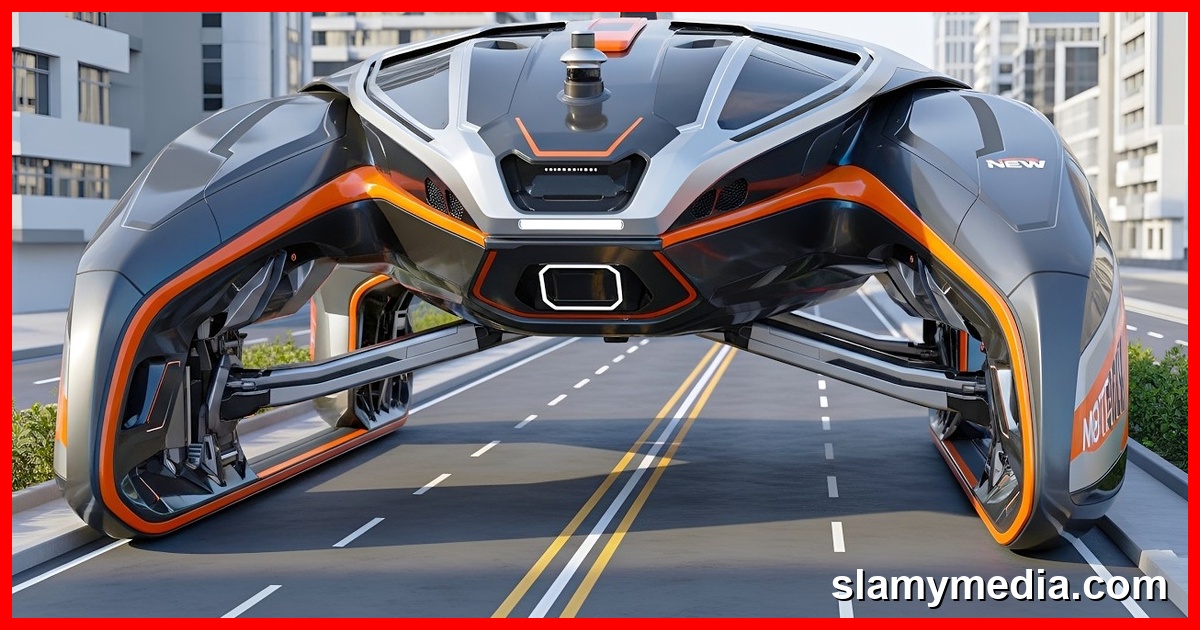
new way of thinking about mobility through smart autonomous cabins designed to move seamlessly across land, sea and air. Instead of switching between separate vehicles, passengers simply enter their destination, and the system coordinates the entire journey automatically. These cabins are designed to operate across multiple platforms, creating a continuous travel experience with minimal interruptions. Powered by clean energy concepts such as hydrogen, the system focuses on reducing environmental impact while improving efficiency. Advanced digital connectivity enhances comfort, accessibility and coordination, making travel more personalised and responsive. By combining multiple transport modes into one integrated network, this concept aims to simplify movement, reduce stress and redefine how people experience mobility in future smart cities and connected regions. Sué's Bio Process Lab. Water is one of the most critical resources in modern cities, and advanced research is shaping how it is treated and reused. The Sué's Bio Process Lab is focused on developing biological treatment methods that use natural processes to clean waste water efficiently. Instead of relying only on chemical or mechanical systems, it harnesses living organisms to break down pollutants and restore water quality. This approach is essential for improving wastewater systems in rapidly growing urban areas. Through continuous research, the lab works on enhancing nutrient removal, organic matter breakdown and energy efficiency in treatment processes. These innovations help turn wastewater into a reusable resource supporting sustainable water management. As cities face increasing pressure from population growth and environmental changes, such biological solutions are becoming more important. By combining science and sustainability, this work supports cleaner water systems and helps build resilient infrastructure for the future. Futuristic mobility ideas often challenge how we think about movement in cities, and the Dahia Insart Gyroscopic Transport concept is one of the most striking examples. Created by the design firm Dahia Insart, it imagines massive disc-shaped vehicles that could travel above regular traffic. These vehicles are designed to stay balanced using gyroscopic stabilization, allowing them to operate on elevated supports without tipping. The goal is to separate layers of transportation, with people moving above congested roads instead of adding more pressure to ground level systems. Some concepts even include features like solar energy, adjustable support structures and different passenger layouts. While the visuals are impressive and
Scene 4 from Smart City Technologies Changing Urban Life!
highly imaginative, this system remains a concept without any real world prototype. It highlights how designers are exploring bold and unconventional ideas to rethink urban transport, even if those ideas are still far from becoming practical solutions in today's cities. Imagine cargo moving at speeds that were once thought impossible, reshaping how goods travel between cities and ports. The Hyperloop Hyperport is a futuristic logistics concept, designed to move shipping containers through near vacuum tubes at ultra-high speeds. Developed by Hyperloop Transportation Technologies, this system focuses on transporting freight instead of passengers, creating a faster and more efficient supply chain. Using advanced capsules, it can carry standard containers and transport large volumes of goods between major hubs in a fraction of the time required by traditional rail or road systems. Its design aims to reduce congestion, cut emissions and improve overall logistics performance. By integrating with existing port infrastructure, it offers a seamless flow of goods from sea to land. This innovation represents a major step towards smarter, cleaner and more efficient transportation systems, helping shape the future of global logistics and urban development. Security is evolving with the rise of intelligent machines, and the Nightscope K7 is a strong example of this transformation. Designed for large outdoor environments, this autonomous robot patrols areas such as industrial zones, logistics yards and transportation hubs without human control. It uses advanced AI-powered sensors to detect unusual activity and respond in real time, helping improve safety and situational awareness. Built for continuous operation, it can work around the clock, providing consistent monitoring where human presence may be limited. Its off-road capability allows it to navigate challenging terrains while maintaining reliable performance. Instead of replacing traditional security, it enhances it by delivering real-time data to support decision-making. With its smart detection systems and autonomous functionality, this technology represents a shift toward more advanced and efficient security solutions, helping organizations strengthen protection while reducing the need for constant human supervision in large-scale environments. Rhyver 2 In modern cities, delivering packages quickly and efficiently is becoming more important than ever, and new technology is stepping in to handle the challenge. The Rhyver 2 is designed to move goods directly from delivery hubs to customers without needing a human driver. Built with advanced
Scene 5 from Smart City Technologies Changing Urban Life!
robotics and physical AI, it can navigate sidewalks, roads and residential areas with ease. It carries packages up to 60 pounds while maintaining smooth and stable movement. The robot can avoid obstacles, follow traffic signals, climb stairs and even open gates, making it highly adaptable in complex environments. Moving faster than walking speed, it helps improve delivery times while maintaining safety. By handling deliveries directly to doorsteps, it reduces reliance on human couriers and represents a major step towards smarter, faster and more efficient urban logistics systems. Solar Cleano B1 Large-scale solar farms need constant maintenance to keep energy production at peak levels, and robotic innovation is making this task more efficient than ever. The solar Cleano B1 is designed to clean vast solar installations with speed and precision. Built as a remote controlled battery-powered system, it can operate for several hours on a single charge, handling both wet and dry cleaning tasks. Its adaptive brush system adjusts to the shape and angle of solar panels, ensuring thorough cleaning across different layouts. Dust and debris can significantly reduce solar efficiency, so maintaining clean surfaces is essential for optimal performance. This robot is capable of covering large areas in a single day, reducing the need for manual labor while improving safety and consistency. By automating solar panel maintenance, it supports higher energy output and helps keep renewable energy systems running efficiently, contributing to more reliable and sustainable power generation for modern cities. Autonomous driving is transforming how people move through cities, and the Waymo Driver stands at the forefront of this change. This system combines advanced sensors, including LiDAR, Radar and high-resolution cameras, with powerful artificial intelligence to understand complex road environments. It continuously scans surroundings, interprets traffic patterns, and makes real-time driving decisions without human input. Detailed mapping technology works alongside live sensor data to anticipate the behavior of other vehicles, pedestrians and obstacles. Unlike traditional systems that require driver supervision, this technology is designed to handle the entire journey independently, from pickup to destination within approved areas. It is already being used in real-world robot taxi services, demonstrating its capabilities on public roads. With millions of miles of driving experience and ongoing development, this system highlights how automation is shaping the future of transportation, making travel more efficient, intelligent and adaptive.