In this week's episode, Nurulink can now read people's thoughts, Elon Musk hints at a new Tesla vehicle in the works and Optimus 3 gets some key updates. In a video shared by Nurulink, this week a patient named Kenneth sits in front of a computer monitor and delivers a line that changes everything we thought was possible with medical technology. He looks directly at the camera and says, I'm talking to you with my mind. It is a simple sentence, but the path to that moment involved a years-long journey through a disease that slowly takes away a person's ability to live normally. Before his diagnosis, Ken was the owner of a transportation business, a husband, and a man who spent his life communicating, driving clients, managing teens, and living a normal life with his family. In January 2024, that changed when he was diagnosed with ALS. This is a disease that essentially severs the physical lines of communication between the brain and the body. The signals are still being generated by the motor cortex, but the cables, the motor neurons, are rapidly deteriorating. One of the most difficult parts of that process is not just the loss of movement, but the sheer physical exhaustion of trying to speak. As Kenneth explained, you don't realize how much energy it takes to talk until you don't have that energy to waste. Over time, this leads to a state of forced isolation. His wife Cheryl described it the most painful part of the disease as the silence that eventually fills their home. Communication becomes a chore, then a slow and eventually it stops entirely. This is why approximately 80 to 95% of people with ALS lose their ability to speak as the disease progresses, and many ALS patients lose complete functional speech within two to three years after their symptoms are first observed. One thing I personally find really hard right now with AI is just keeping up with all the different models. One week everyone says chat GPT is the best, then suddenly people say Gemini is ahead, then Claude releases something new, and the conversation shifts again. If you actually want to stay up to date with everything happening in AI, you almost have to
Scene 1 from Neuralink Just Did The Impossible
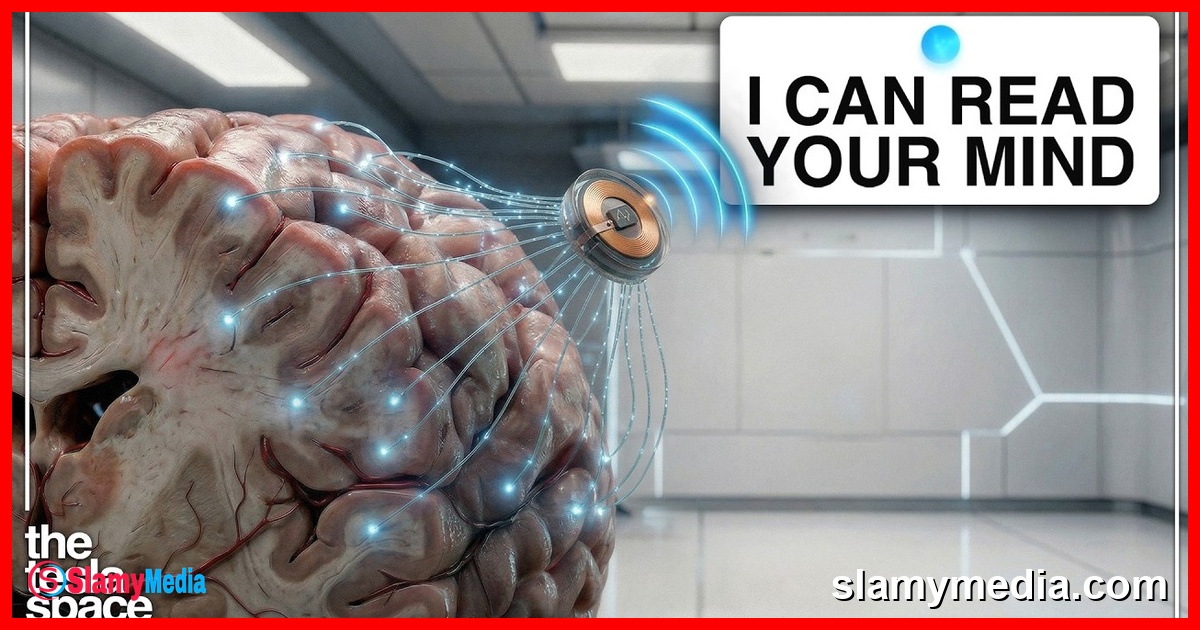
subscribe to multiple tools and constantly switch back and forth between them. That's why I've been checking out chat LLM from Apicus AI. Instead of paying for several different AI subscriptions, it basically puts a bunch of the top models, like chat GPT, Claude, Gemini, GROC, and others all in one place. The platform even uses something called Route LLM, which automatically selects the best model depending on what you're asking. So you're always getting the strongest response without having to manually jump between tools. It's also pretty fun if you like experimenting with future tech ideas. You can ask at things about Tesla's AI, autonomous driving, or even what a next generation Optimus Robot might look like, and it can generate images, videos, quick presentations, or even small apps around those ideas. So it's basically an all-in-one AI workspace where you can access a bunch of the best models and creative tools in one place, and the whole thing is around $10 a month, which is way cheaper than paying for multiple AI tools separately. If you want to try it yourself, check out the link in the description and pin comment and give chat LLM a look. And this is where NERLINK's latest clinical trial, known as the Voice Study, changes what's possible. While the company's first high profile product telepathy focused on the motor cortex to allow patients, like Nolan Arbaugh or John Noble, to control a computer cursor, the Voice trial is a different technical challenge entirely. If you want to move a cursor, you are essentially looking for directional intent, up, down, left, right. But speech is infinitely more complex. It requires the coordination of dozens of muscles in the throat, tongue, and mouth, all firing in microsecond sequences. To capture this, the NERLINK team moved the N1 implant just a couple of inches deeper and more lateral into the brain, targeting the specific area responsible for speech execution. The breakthrough is that NERLINK isn't detecting sound or physical vibrations, it is detecting neural intention. When Kenneth imagines speaking or silently mouths a word, the N1 implant records those specific neural firing patterns through over 1000 ultra-thin electrode threads.
Scene 2 from Neuralink Just Did The Impossible
Even if the physical muscle in his throat no longer responds to the brain's commands, the intent is still captured at the source. The system then takes those raw electrical spikes and maps them into digital language. Kenneth described his recovery from the robotic surgery as surprisingly straightforward. He was discharged from the hospital the very next day, but the training was where the real work began. The process moved through three phases that show how quickly the models are adapting to human thought. In the first phase, immediately after the surgery, NERLINK engineers guided Kenneth through simple calibration exercises. He was asked to vocally speak several sample sentences so the system could begin to map his neural intent to the actual words he was trying to form. At this stage, Kenneth still used his limited vocal ability, which provided a ground truth for the AI to learn from. By February, the second phase began. This is where the physical deterioration of ALS usually wins, but NERLINK flipped the script. They trained the models to decode Kenneth's silent mouth movements. Even as his voice began to fail him, the system could watch the neurons firing for specific phonemes, which are the smallest building blocks of language, and assemble them into sentences in real time. Then came the third phase, imagined speech. This is the hardest problem in BCI communication. At this stage, the system was able to decode words without Kenneth moving his mouth at all. He simply thinks the words, the N1 chip amplifies and digitizes the signal and the computer speaks for him. One of the researchers noted that the progress went from zero to a hundred almost overnight as the model began to anticipate Kenneth's internal speech patterns. Now, having a computer speak for a patient is nothing new, Stephen Hawking famously used a vocal synthesizer for decades, but the Hawking method required a physical interface, like a cheek twitch, and resulted in a generic robotic voice. NERLINK has taken a more personal
Scene 3 from Neuralink Just Did The Impossible
approach. They used historical audio recordings of Kenneth from before his diagnosis to train a custom voice synthesizer. When Cheryl heard the system say, I love you, she didn't hear a digital assistant, she heard what she calls the OG Kenneth voice, the same voice she fell in love with, and heard every day for years. But as impressive as the voice study is, it is only part of NERLINK's current offensive on neurological conditions. Elon has been increasingly vocal about NERLINK's other major program, Blindsight. Blindsight targets the visual cortex directly bypassing damaged eyes or non-functional optic nerves entirely. In September, 2024, the FDA granted Blindsight breakthrough device designation, and as of early 2026, the company is moving toward high volume production of the specialized hardware required for this program. Elon has been careful to set expectations here. He has noted that the initial resolution will be low comparing it to a Tari graphics or pixelated 8-bit version of reality. But the long-term potential for Blindsight is far more profound. When you zoom out from these individual clinical trials, you start to see how they fit into Elon's broader vision of amazing abundance. For Elon, true abundance isn't just about having more stuff, and that future is possible with Optimus. It is about a future where everyone has the opportunity to live their best life regardless of the biological hand they were dealt. If you are born blind or if you lose your ability to speak to ALS, the abundance of a cheaper electrical car doesn't matter much. True abundance must include the restoration of human capability. In this light, NERLINK is the second chance for people who have had their autonomy stripped away by biology. As Kenneth put it in his reflection, it will give us back a voice and a voice is a very important thing to have. While NERLINK is pushing the boundaries of what humans can do, Elon Musk spent part of this week hinting at a project much more familiar to the average household. A true Tesla family vehicle. But in typical fashion, the design might be a total departure from the traditional suburban minivan. The discussion was sparked by a post showing the
Scene 4 from Neuralink Just Did The Impossible
Cybertruck's rear bench fitting three child seats across. When a user pushed back asking Tesla to finally build a minivan, Elon's response was immediate. Something way cooler than a minivan is coming. That single line has sparked a massive conversation because in early 2026, Tesla's lineup is in the middle of its most radical transition yet. As we've covered previously, the Model S and Model X are officially being retired to this quarter to make room for Optimus production at Fremont. This leaves a glaring hole for families who need more than five seats. While the Model Y remains the world's best-selling car, its third row has always been a compromise, and the extended wheelbase Model Y L from China is yet to be confirmed for the US market. But this conversation took a more technical turn when Flexport CEO Ryan Peterson responded with a specific idea. He suggested that if Tesla built a three-row vehicle where each row had its own set of doors, so no one has to climb over seats, it could have a surprisingly large social impact. Elon replied with a single word, noted, on its own that might not mean much, but later that same day the idea came back again. Another user shared a study suggesting that easier access to family vehicles is linked to higher birth rates, reinforcing the same concept. This time, Elon responded more directly. Well, I guess we should solve this. Interestingly enough, Tesla has teased such a vehicle in the past. We got our first real hint of this in the Master Plan Part 4 video released by Tesla last September. While much of that presentation focused on sustainable abundance through AI and Optimus, Eagle Eye viewers spotted a teaser for a vehicle that looked like a radical departure from the S3XY lineup. The mysterious vehicle seemed to be built on the Cybertruck platform as it features the same angular stainless steel language, but with a significantly taller roof and a cabin that seemed designed to carry a lot of passengers. The Tesla Model Y L proved that demand for a family hauler exists. The Master Plan Part 4 video teased that Tesla has considered a different form factor, and now it seems Elon is ready to build the bridge to a future where the friction of family
Scene 5 from Neuralink Just Did The Impossible
logistics is finally a thing of the past. Now, if Nurelink is about restoring the individual and the new family vehicle is about restoring the household, our final story today is about scaling that impact to the entire planet. This week, we got our first real look at Optimus Gen 3, and it confirms that Elon Musk was not kidding when he said that the upcoming version of Optimus will look like a person in a suit. The reveal started with a group photo posted by Constantinos Lescaras, the director and lead of the Optimus program. The image featured the core engineering team surrounding a prototype that represents a major shift from the mechanical designs of the past. Finished in a sleek dark black exterior, Optimus 3 features a noticeably more muscular and athletic build, but the exterior design wasn't the only thing that stood out to Eagle Eye Tesla Watchers. In the background of the shot, a row of Optimus Gen 2.5 units could be seen, one of which had its chest panel opened for maintenance. Multiple observers immediately noticed that the central processing unit mounted in the robot's chest bears a striking resemblance to the Tesla FSD computer. This suggests that Optimus doesn't just have a big heart, it's a robot that thinks with its heart, literally. Amidst the surge of excitement, Elon Musk weighed in confirming the status of the project with a characteristically blunt update. Optimus 3 is walking around but needs some finishing touches before it's ready to be shown. Those finishing touches likely refer to the new 22 degrees of freedom hands, which use a complex tendon driven system to achieve near-human dexterity. With the Fremont factory already being repurposed to handle a run rate of 1 million units per year, the transition from research project to mass production is officially underway. We are no longer looking at a robot that can merely perform tasks, we are looking at the arrival of a new species of labor, one designed to usher in an era of amazing abundance.