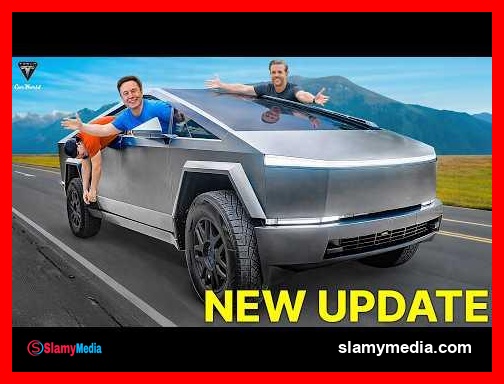
Yes, Tesla has just confirmed that the Tesla Cybertruck has never been discontinued. In fact, West Morrill, the lead engineer of the Cybertruck program, revealed that they have recently rolled out an update introducing at least eight major design changes. And since 2026, Tesla has quietly implemented structural modifications to the front, underbody, and footwell area to improve driver protection and small offset collisions. While Tesla has confirmed that the more affordable version is already sold out through the end of this year, experts believe that Tesla Cybertruck sales could increase significantly next year, with a substantial price reduction. Tesla may no longer have to compete as directly with the leading rivals in this segment. So, what changes has the Tesla Cybertruck undergone? And how are owners evaluating these updates? Are they truly useful in real-world driving conditions? It has to be said that Tesla makes visually striking and truly impressive cars. In the past, fuel-efficient hybrid vehicles were often mocked as being for weak men, but today, not only men virtually any woman or man in the market for a car wants to own a Tesla that looks great, is genuinely practical, and importantly, is environmentally friendly. Of course, in general, Tesla vehicles seem to sell themselves through word of mouth and strong brand image rather than heavy marketing. That's why objective reviews are so important, so that each customer can decide exactly what kind of Tesla they need, or understand why a small number of owners wish they had never made this isn't meant to be advised to buy a Tesla or don't buy a Tesla, it's simply a look at real world feedback and facts to help you gauge how confident you can be in your decision. By now, it's no secret that Tesla has faced some production issues. Panel gaps on Tesla vehicles are a well-known example, especially on the Tesla Cybertruck, but to understand the Cybertruck, you have to start with what Tesla clearly prioritized durability and real-world utility. The move to an unpainted stainless steel exterior is one of the most radical shifts in modern automotive design. On the surface, it looks like a stylistic choice, but in practice, it fundamentally changes ownership. There's no paint to chip, no clear coat to fade, and no need to worry about minor scratches from rocks or debris. For anyone who actually uses a truck as a truck on job sites, rough terrain, or long highway drives, this is a tangible, everyday benefit. It removes an entire category of maintenance that drivers have simply accepted for decades. That same philosophy extends to the glass. Tesla's so-called armored glass isn't indestructible, but it's clearly engineered to be more resilient than conventional automotive glass. The goal isn't perfection, it's reducing the likelihood of cracks and damage in real-world scenarios, and when you combine that with the overall rigidity of the exoskeleton structure, the Cybertruck starts to feel less like a traditional vehicle and more like a piece of industrial equipment designed to endure. But durability alone doesn't make a truck compelling. What really sets the Cybertruck apart is how Tesla re-imagined the functionality of the truck bed. Instead of treating it as a passive storage space, they turn it into an active utility platform. The powered Tano cover, for example, seems like a small upgrade until you've actually used one.
រូបភាពទាក់ទងនឹង It Happened! Elon Musk Reveals 2026 Cybertruck Refresh & Crazy 4680 Battery Boost! (1)
The convenience of opening and closing it automatically transforms how often and how easily you access the bed. It's one of those features that quickly goes from nice to have to hard to live without. Then there are the integrated power outlets, both 120V and 240V, which effectively turn the Cybertruck into a mobile generator. This isn't just useful, it's transformative. Whether you're powering tools on a work site, running appliances during a blackout, or even charging another electric vehicle, the truck becomes an energy hub. Add in the modular rail system and the cleverly designed sloped bed, which allows taller items to fit even with the cover closed. And you begin to see a consistent pattern Tesla is trying to maximize functional versatility in ways traditional pickups rarely attempt. That same forward thinking approach carries into the driving experience. The introduction of steer by wire fundamentally changes how the vehicle feels from behind the wheel. At low speeds, steering becomes incredibly light and precise, making a large truck surprisingly easy to maneuver in tight spaces. At higher speeds, the system adjusts to provide more stability and control. When combined with four-wheel steering, the result is a vehicle that defies its own size, offering a turning radius closer to a much smaller car. This isn't just a technical upgrade, it directly reduces driver fatigue and increases confidence in everyday driving. Inside the cabin, Tesla continues to lean into its strengths. The large central touchscreen is fast, responsive, and intuitive. Reinforcing the company's lead and automotive software. The interface feels modern in a way that most competitors still struggle to match. At the same time, the cabin offers a high level of comfort, with spacious seating, thoughtful storage solutions, and features like heated and ventilated seats that make long journeys far more pleasant. Fold flat rear seats add another layer of practicality, allowing the interior to double as extended cargo space when needed. However, this is where the narrative begins to shift, because many of the same decisions that make the Cybertruck unique also introduce real challenges. The exterior design, with its sharp angles and hard edges, is a perfect example. Visually, it's striking and unmistakable. Practically, it raises concerns. Sharp steel edges can pose safety risks, especially in everyday interactions like loading cargo or simply walking around the vehicle. Rear corners and low angles increase the likelihood of accidental bumps or injuries. Even the front trunk mechanism has drawn criticism for its potential to trap fingers if not handled carefully. Visibility is another area where compromise becomes apparent. When the tonneau cover is closed, rear visibility is severely limited, rendering the traditional rearview mirror almost useless. Drivers are forced to rely heavily on cameras, which, while advanced, don't fully replicate the instinctive awareness that mirrors provide. It's a shift that requires adaptation, and not everyone will find it comfortable. Beyond these larger concerns, there are smaller, more subtle issues that affect daily usability. The stainless steel exterior, while durable, is highly prone to fingerprints, making the vehicle look dirty almost immediately after being touched.
រូបភាពទាក់ទងនឹង It Happened! Elon Musk Reveals 2026 Cybertruck Refresh & Crazy 4680 Battery Boost! (2)
Static electricity shocks when exiting the vehicle have been reported, adding an unexpected annoyance. Debris-like leaves can become trapped in tight panel gaps, making cleaning more difficult than it should be. Build quality has also been a point of discussion. Some users have noted loose trim pieces, occasional rattling noises, and inconsistencies in panel alignment. These aren't catastrophic flaws, but they do suggest that the cyber truck, in its current form, is still evolving. Even routine tasks, like inflating tires, can be less straightforward due to design quirks, such as wheel covers that need to be removed. What makes the cyber truck particularly fascinating, is how many of its defining features fall into the category of trade-offs rather than clear winds or losses. The sloped bed design, for instance, improves vertical storage capacity, but limits the ability to carry longer items with the cover closed. The massive windshield enhances forward visibility, but creates challenges in cleaning and interior ergonomics. The yoke style steering wheel complements the steer-by-wire system, but introduces a learning curve that may not appeal to all drivers. Tesla's decision to remove traditional controls, such as the gear selector, further illustrates this philosophy. A cleaner, more minimal interior comes at the cost of relying more heavily on the touchscreen for basic functions. Similarly, replacing mirrors with cameras offers a sleek, high-tech aesthetic, but sacrifices the intuitive feedback drivers are accustomed to. Even the differences between the standard and premium versions of the cyber truck reflect this balance of compromise. The lower price of the standard model makes it more accessible, and certain material choices, like cloth seats, may actually be more practical for everyday use. At the same time, the removal of features such as air suspension, premium audio, ventilated seats, and rear displays significantly alters the overall experience. Smaller wheels improve ride comfort but reduce visual impact while a simplified interior emphasizes functionality over luxury. So what trade-offs come with the new cyber truck version? By introducing a new all-wheel drive version at a significantly lower price point, Tesla didn't just adjust pricing, they reset the conversation. This wasn't a typical discount or promotional tactic. It was a deliberate attempt to bring the cyber truck closer to its original promise, a high-performance electric pickup that's actually within reach for a broader audience. And yes, $59,990 isn't cheap in absolute terms. But within the context of the current EV truck market, it changes everything. Suddenly, the cyber truck is no longer competing as a premium outlier. It's positioned as one of the most accessible full-size, all-wheel drive electric pickups available in the United States. That shift alone has the potential to dramatically expand its customer base. What makes this repositioning even more compelling is that Tesla didn't strip away the core elements that define the cyber truck experience. The fundamentals are still there. You're still getting a massive 123 kilowatt hour battery, a modern 48-volt electrical
រូបភាពទាក់ទងនឹង It Happened! Elon Musk Reveals 2026 Cybertruck Refresh & Crazy 4680 Battery Boost! (3)
architecture, and a range that comfortably supports long-distance driving. Performance remains a strong point as well, with acceleration figures that rival vehicles in completely different categories. More importantly, Tesla retained the features that genuinely differentiate the cyber truck from traditional pickups, the inclusion of steer-by-wire and four-wheel steering. For example, continues to give the truck a level of maneuverability that feels almost counterintuitive given its size. It's one of those things that you don't fully appreciate until you experience it, but once you do, it's hard to go back. Then there's the practical side. High-speed DC fast charging ensures the truck is road trip capable, while the power share functionality transforms it into something far more versatile than a typical vehicle. The ability to power a home during an outage isn't just a feature, it's a value proposition that resonates strongly in certain markets. However, none of this comes without compromise. And this is where Tesla's strategy becomes both bold and risky. To reach that lower price point, they had to make cuts and those cuts are noticeable. Towing capacity has been reduced, which may not matter to every buyer but could be a deal-breaker for those who rely on their truck for heavy-duty tasks. The removal of adaptive air suspension changes the driving dynamics, replacing a highly adjustable system with a more conventional setup. Inside the cabin, the differences become even more apparent. Premium materials give way to more practical alternatives. Features that were once standard like ventilated seats or advanced audio systems are no longer part of the package. The overall experience shifts from luxury to functionality, which may align with the needs of some buyers but disappoint others who expected more. And yet, this is precisely where the Cybertruck becomes most interesting. Because these decisions aren't random, they reflect a larger shift in Tesla's priorities. For years, Tesla operated as a company that pushed boundaries, often at the expense of practicality. The Cybertruck itself was originally introduced as a bold, almost defiant statement about the future of transportation. But today, the context is different. The EV market is no longer in its early, explosive growth phase. Competition is intensifying. Consumer expectations are evolving. And economic pressures are forcing even the most innovative companies to think more pragmatically. In fact, it becomes even more meaningful when you consider that the Cybertruck has now been recognized as one of the safest pickup trucks on the market. Even outperforming established benchmarks like the Ford F-150. For a vehicle that has faced intense scrutiny since day one from its unconventional design to its production challenges, this kind of validation signals that Tesla is beginning to stabilize one of its most controversial products. And that stability couldn't come at a more critical time. Because the competitive landscape around the Cybertruck is quietly shifting in Tesla's favor. One of the biggest developments is the strategic retreat of the Ford F-150 Lightning from the fully electric pickup space. As Ford pivots toward hybrid and extended range solutions,
រូបភាពទាក់ទងនឹង It Happened! Elon Musk Reveals 2026 Cybertruck Refresh & Crazy 4680 Battery Boost! (4)
it effectively leaves a gap in the market, especially for buyers who are committed to going fully electric without compromise. This creates a rare opening, fleet operators, early adopters, and EV-focused consumers who might have previously split their attention now have fewer direct alternatives. And in a segment where competition was already limited, even a small shift like this can have an outsized impact on demand. It's not just about Tesla gaining ground, it's about the playing field itself becoming less crowded. But here's where things get really interesting. Tesla isn't just passively benefiting from this situation, they're actively repositioning the Cybertruck to take advantage of it. Because let's be honest, not long ago, the narrative around the Cybertruck was starting to turn negative. Sales were underwhelming, expectations were sky high, and there was growing concern that the vehicle might become more of a liability than an asset. Finally, how does the Tesla Cybertruck 2026 tackle safety concerns? The Tesla Cybertruck has entered the market with undeniable ambition, but its journey so far has been shaped as much by controversy and growing pains as by innovation. From the outset, the vehicle has faced a series of challenges that raise important questions about production readiness, quality control, and market acceptance in a segment that demands both durability and trust. One of the most visible issues has been the unusually high number of recalls associated with the Cybertruck. Regulatory oversight from the National Highway Traffic Safety Administration has resulted in more than 13 recall campaigns affecting nearly every unit produced. These recalls have addressed a range of concerns, from mechanical defects to software related inconsistencies. While recalls are not uncommon in the automotive industry, the volume and frequency scene here have fueled criticism that the vehicle may have been pushed into production before reaching full maturity. Among the most debated problems is the issue of unintended acceleration linked to the accelerator pedal. In early production, models built between late 2023 and early 2024, a manufacturing process involving soap-based lubricant compromised the adhesion of the pedal pad. Under certain conditions, the pad could dislodge and become trapped within the interior trim, effectively holding the accelerator in a depressed position. This created a potentially dangerous scenario in which the vehicle could continue accelerating unless the driver intervened with the brake system. Although no confirmed accidents were directly attributed to this specific defect, the risk alone was enough to trigger widespread concern and regulatory action. Tesla responded with a voluntary recall covering several thousand vehicles, implementing a physical fix that involved drilling and reinforcing the pedal assembly with a rivet. The repair process itself was relatively quick, but the implications were significant. It highlighted how even a minor deviation in assembly procedures could cascade into a critical safety issue. The incident also drew attention to internal quality assurance processes and raised broader concerns about whether production speed had taken priority over thorough validation. Structural concerns have also played a central role in shaping public perception of the cybertruck. Reports of body panels detaching while driving introduce the possibility of road hazards not
រូបភាពទាក់ទងនឹង It Happened! Elon Musk Reveals 2026 Cybertruck Refresh & Crazy 4680 Battery Boost! (5)
only for cybertruck owners but for other motorists as well. These panels, originally secured using adhesive methods, were later reinforced with additional mechanical fasteners to improve durability. Tesla initiated another large-scale recall to address the issue, replacing or securing panels across tens of thousands of vehicles. While the company acted quickly to resolve the problem, the situation reinforced a narrative that the vehicle was still undergoing real-world testing after reaching customers. Beyond these headline issues, a series of smaller but still impactful defects have contributed to the overall picture. Some owners reported excessively bright exterior lighting that could impair visibility for other drivers, while others encountered malfunctions in windshield wipers and camera systems that are essential for driver assistance features. In response, Tesla deployed over-the-air software updates to recalibrate lighting intensity and address digital system bugs. This ability to update vehicles remotely remains one of Tesla's strongest advantages. Allowing rapid iteration without requiring physical service visits in every case. Despite these challenges, it would be misleading to frame the cybertruck purely as a safety liability. Independent crash testing has delivered strong results, with top-tier ratings in multiple categories and recognition for occupant protection. These outcomes suggest that the underlying structural engineering of the vehicle is sound, even if certain components and finishing details required refinement. In other words, the core safety architecture appears robust, while peripheral systems have been the primary source of issues, market performance. However, reflects a more complicated reality. Sales have not matched the level of anticipation that preceded the vehicle's launch. High pricing, combined with early-quality concerns, has slowed adoption and contributed to a growing inventory of unsold units. In a competitive landscape that includes established electric pickups, consumers appear to be weighing not just innovation but also reliability in long-term confidence. The cybertruck's unconventional design and bold engineering choices have captured attention, but they have also introduced unfamiliar risks that some buyers are hesitant to accept. Export limitations add another layer of complexity, regulatory differences, particularly in pedestrian safety standards, have restricted the vehicle's availability in certain international markets. This limits Tesla's ability to offset domestic challenges with global demand and underscores how design decisions can have far-reaching consequences beyond initial engineering goals. So, with its growing list of recalls, is Tesla prioritizing speed to market over long-term reliability and quality control. Please share your opinion in the comments section below this video. Thanks for watching our video subscribe now so you don't miss the next breaking Tesla update. It's coming in just two days. If you want to explore more exciting information about Tesla EV or Tesla bot, don't forget to hit the like button and share this video. Also, make sure to subscribe to Tesla Carworld and turn on notifications so you never miss our latest videos. We appreciate your support and look forward to seeing you in the next video. Goodbye.