There will be a city on Mars in the year 2050. It will be humanity's second home, our first L-post away from the shelter of the Earth, and a construction project that will cement our future as a multi-planet species. SpaceX is determined to make this vision a reality, but it's going to require more than just ambition and big rockets to colonize Mars. The biggest thing that would set a Mars city apart from some other off-world colony like a moon base, for example, is this idea of being self-sustaining. You see, a person living on the moon could still return to the Earth as often as they like. There's only about one day of travel time between the two, and likewise that would mean that any resources the people of the moon might require from Earth would be within easy reach at all times. Mars is a different story. Now we are looking at eight months of travel time one way from Earth. This could be improved in the future with nuclear propulsion systems, but even if that works out as good as can be expected, the trip to Mars would still be around 45 days. That means the people of Mars cannot be dependent on the resources of Earth. They have to learn to harvest everything that the red planet has to offer, and what it has is really not much. But that will drive the creation of a massive industry on Mars to extract those resources and transform them into the necessities of human life. With the idea being that one day, the ships from Earth will just stop. Whatever the reason for that might be, support from our homeworld will come to an end, and humanity will continue on from our second planet. This is going to require around a million people or more to be living and thriving in a Martian city before anything goes wrong on Earth. So that means we need to build deep roots on Mars, both figuratively and literally. First, there were robots. The planet Mars will be inhabited by dozens, maybe hundreds of robots before any person ever sets foot there. And when we do get there, we'll be following in the footsteps of this thing. Optimus, the Tesla bot. It's probably not a coincidence that a sister company of SpaceX is making the exact technology that they're going to need to start building on Mars. Optimus is a fully autonomous AI powered humanoid, and it's designed to take over any job that is currently done by people. But on the flip side of that, Optimus could also begin doing a job that will eventually be taken over by a person like a Mars colonist, for example. The thing about Mars is that it's just too far away and too inhospitable to simply launch
Article Image 1
a crew of human beings out onto the frontier and let them fend for themselves. It may have worked for the Europeans colonizing the new world, but the journey to Mars will be by far the most dangerous migration that humankind has ever experienced. The surface of Mars is colder than Antarctica. It's drier than the Sahara Desert, but with even bigger dust storms and the atmosphere is so thin that liquid can't even exist. There's just not enough pressure to hold it together, so what you get is instant evaporation. People are mostly liquid, so outside of a pressure suit on Mars, you would instantly start to freeze, boil, and suffocate all at the same time. And even if you did stay safe inside your suit, you're still likely to get a heavy dose of radiation. The lack of atmosphere out there means that there's almost nothing separating the Martian surface from the colossal nuclear reactor in space that we call our sun. This is why SpaceX has already made their plan to launch the first ships to Mars with Optimus robots onboard. Optimistically, this could happen as early as 2026. SpaceX has a roadmap that shows 5 Starship landers heading to Mars each one loaded with 10 tons of payload. Now the only real goal of that first transit will be to land at least one ship without crashing. That's why they want to send more than one at a time because there will probably be a learning curve. One of the things we know about SpaceX is that they learn through trial and error, and oftentimes, that means stuff blows up at first, but once they get it right, they're able to lock in and just keep executing very consistently. So assuming that one ship lands safely and releases a handful of Optimus robots into the Martian landscape, they're still not going to have a whole lot to do until the next wave arrives. Two years after the first successful landing is when the first real colonial fleet arrives. 20 Starship landers each carrying 75 tons of cargo, most of which is going to be infrastructure for the first people to arrive. Now, let's talk about where this Mars colony is going to be located. SpaceX has already identified the Arcadia region as a prime candidate for settlement. This is just northeast of the volcano Olympus Mons, the tallest mountain in the entire solar system. Arcadia is a flat plane that's close to the equator yet still believed to contain large deposits of water ice, which is going to be the single most important resource on Mars for a couple of reasons. When we talk about the infrastructure that the Optimus robots are going to be building for their future human comrades, there are two critical machines that they need to get
Article Image 2
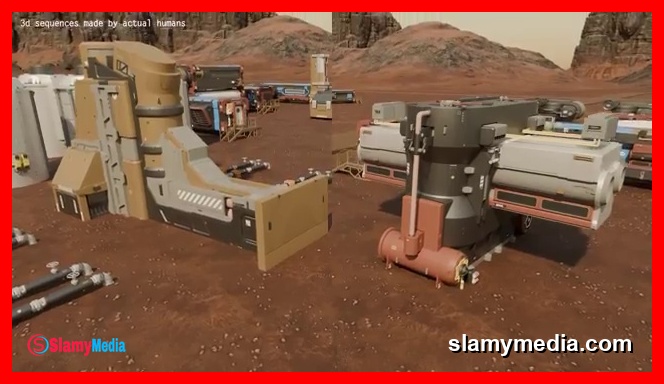
up and running. One is a water treatment plant. Water will need to drink, but water is really heavy. Just bringing enough of it to keep everyone alive on the eight month journey from Earth to Mars is going to be a challenge. And that already involves using a lot of recycled water. But there are only so many times that you can turn last night's pee into this morning's coffee. Now, the cool thing about water is that it can serve many purposes beyond just hydration. For example, you can break water apart into two base elements, oxygen and hydrogen. So, as part of the same process that converts ice into drinkable water, our robot scouts can also produce oxygen for future colonists to breathe. Then, there's hydrogen, not particularly useful for human consumption, but very important for making rocket fuel. Now, here's something to consider in the long run. Signing up to be a Mars colonist is probably going to involve a one way ticket to the red planet. But, in the short term, before we have a big awesome city for everyone to live in, people are going to want a return trip. And just like with water, rocket fuel is very heavy. Just bringing enough of it to last the journey and land on Mars will be difficult, which means there won't be fuel left over to launch a second time and come all the way back to Earth. So a second big infrastructure project for the Optimus Bots is going to be constructing a rocket fuel production plant. Now, there are some rockets that burn pure hydrogen as their fuel source, but it's not a popular choice because hydrogen is a very difficult element to work with. It's very prone to weird chemical reactions and is extremely hard to contain because it's the lightest element in the universe. That is why SpaceX chooses methane as their fuel for starship. It's hydrogen with a little bit of carbon mixed in. One carbon atom for every four hydrogen atoms and that carbon just helps to stabilize the mixture and weigh it down enough to make this whole process a lot easier. Now we know hydrogen comes from water, but carbon will come out of thin air literally. What little atmosphere Mars does have is mostly carbon dioxide, so a carbon capture device would be able to extract the necessary atoms from the air. You get carbon to make methane and some bonus oxygen for people to breathe. Now in order to support the new robotic manufacturing industry on Mars, there's going to need to be a mining operation as well. The water ice that we are going to need is located under the ground. That means we need to dig it up. And again, probably not by coincidence, SpaceX is going to have access to some boring technology from another sister company.
Article Image 3
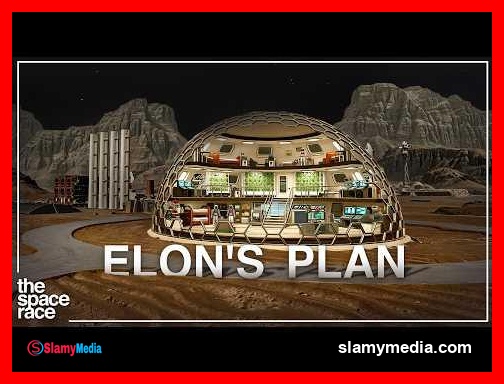
Now a full scale tunneling machine is not going to be practical for early construction on Mars, but taking that same design and scaling it down into a Martian mining rig is going to start unlocking those resources that make it possible for humans to survive and eventually create a sustainable colony. As a bonus, all of the soil and rock that they dig up while mining can be processed into a kind of asphalt and used to lay down hard surfaces for roads and landing paths. And that is where we end up about two years after our first large scale robot landing. This could be as early as the year 2030. There's nothing wrong with a little optimism from time to time. And now it's time for the first people to arrive on Mars as part of this massive Starship fleet with 100 landers each carrying 150 tons of cargo. There are going to be two new construction projects that need to begin once the first human settlers arrive. One is a power plant. Up until now the robots have only needed enough electricity to recharge their batteries, something that could easily be handled by a few solar panels. But now that people are here, their energy needs are going to be much higher. So once the power plant is ready, all of the infrastructure that the robots have been building gets turned on. Life support systems that provide oxygen, water, heat and air pressure need to run 24-7. The length of one day on Mars is almost exactly the same as a day on Earth, which means that every 12 hours or so, it's going to get dark. And that means solar panels need to be hooked up to batteries. Big ones. By now we can probably say it's not a coincidence that Tesla has been manufacturing large battery storage systems that they call the Megapack. You can fit a couple of these inside of a Starship lander, and just one Megapack can power a small town for a couple of hours. So keeping a small Mars colony alive overnight is actually more than doable. But people also need homes on Mars. The advantage of the Starship lander with its gigantic size is that it can continue to provide adequate shelter for people long after they touch down on Mars. So there's no rush to move out. But Starship is also not an ideal long-term home. It's very tall and narrow, and you have to take an elevator every time to get in or out. So now, people and OptimusBots work together to build the first permanent habitat on Mars. These habitats can take many forms, the first one that comes to mind for most people is going to be a big glass dome. And that's maybe something we can figure out a lot further down the line of city construction, but for the first Martian homestead, that's just way too hard. For example, we don't build a lot of giant glass domes on Earth, but the closest thing
Article Image 4
ever made to a sci-fi Mars city would be the Singapore Airport Nature Dome. This covers 135,000 square meters of internal space, and the structure itself weighs 3500 tons, which would be at least 350 Starship loads of material just to build one dome. Plus all of the construction machinery you would need on Mars to actually assemble something of this size. Now we can build domes, we just have to think more about working with the natural environment of Mars. For example, we can make an ice dome. It's an idea that's currently being studied by NASA's Langley Research Center, and it takes advantage of the natural insulating power of water. This is the same reason why Inuit people in the North make igloos. Frozen water will keep heat in, but just as important on Mars, it's going to keep radiation out. You see, water is actually one of the best shields against deadly radiation from the sun. The ice dome begins with an inflatable donut-shaped module at its base. In a solid mold for the dome shape goes up around that, and finally, autonomous robots would fill the dome with water ice sourced from the Martian surface. The ice would be translucent enough to allow natural light to shine through, which is going to benefit the natural sleep cycle and mental health of people living inside. This makes the ice dome ideal for a house, but it might lack the versatility required for bigger and more diverse infrastructure, like research labs and factories. So keeping the inflatable module at the core, which is something we can make on Earth, in pretty much any shape and size we might need, and then fairly easily ship to Mars in a single rocket, then we just need a more versatile material to cover it over and provide that extra strength in a solid shell. Again, we need to take advantage of local resources. So if ice mining operations are going to keep progressing as humans arrive, then we're going to end up with plenty of rock that gets dug up along the way to finding that ice, which we can then turn around and use as construction material. We already looked at using this mining waste to make asphalt, but for building a sturdy shell around an inflatable house, we'll need something that's more like concrete. In order to do this on Mars, you need a binder. That's going to help the rocks stick together and form into a solid material. And this binding agent is also going to be easy to find in our Mars colony because it's going to come from human waste. This is a concept often referred to as astrocrete or biocrete, and it actually turns the bodily fluids of astronauts into a building material.
Article Image 5
The idea for biocrete comes from a study at the University of Manchester, and they've tested this process using human blood, sweat, and urine. Now for an ideal Mars colony, we would hope to avoid shedding too much blood and sweat, but assuming we can all stay hydrated, there should be an abundance of urine to go around. We know that it's possible to extract drinkable water from our pee, but there's also a lot of waste product that gets filtered out. That's called urea, and that's the good stuff. It can actually be mixed with the soil on Mars to make a concrete even stronger than what we build with today on Earth. I know that sounds crazy, but medieval stone masons actually used to mix animal blood into their mortar when they were building castles to make it strong, so this isn't entirely new. And then there's food, which is arguably going to be one of, if not the hardest aspect of a self-sustaining city on Mars. Just like water and fuel, there's only so much food we can possibly bring down along with us from Earth. So at some point, we will need an abundant supply of Mars-grown nutrition. Farming is difficult under any circumstance, even on Earth, it's one of the toughest jobs around, but Mars poses a unique challenge to growing food. The soil is literally toxic. Martian soil is laced with something we call per chlorates, which contain chlorine, which is the stuff we put in swimming pools to stop bacteria from growing. So the same goes for anything you might want to plant in Mars soil. The per chlorates are going to stop it from growing. And that leaves us with two solutions that are about equally as challenging. Either we need to transport all of our soil for agriculture from the Earth to Mars, which even a starship full of dirt is not that much when we're trying to grow food for a million people. Or we need yet another Mars-based industry for processing soil, removing per chlorates, and making sure that there's adequate nutrients available to make it viable for growing plants. Now, luckily there's another outlet for repurposing human waste. If urine can be used to make cement, then the number two can be used to fertilize the fields and feed a million people. No one said this was going to be pretty, but if we can lock down those basic necessities of life, power, water, oxygen, shelter, food, and if we can produce those things in a way that is self-sustaining that doesn't rely on the Earth to ensure the future survival of humans on Mars, then this is the first step towards becoming a true, multi-planet species. Now, where do we go next?