How Do Electric Cars Actually Work? (It’s Simpler Than You Think!)
Imagine the bustling streets of New York City in the year 1900. Horses clop along the cobblestones, steam-powered carriages hiss, and electric cars silently glide by. Wait, electric cars in 1900? Yes,...
Imagine the bustling streets of New York City in the year 1900. Horses clop along the cobblestones, steam-powered carriages hiss, and electric cars silently glide by. Wait, electric cars in 1900? Yes, long before Elon Musk was even born, electric vehicles were the kings of the road. In fact, a third of all cars in American cities were electric. They were quiet, easy to drive, and didn't belch thick black smoke. But then, cheap oil and Henry Ford's Model T came along, putting the electric car to sleep for a century. Today, they've woken up and are taking over the world once again. Welcome to simple things, surprising histories. Today, we're looking under the hood to answer a simple question.
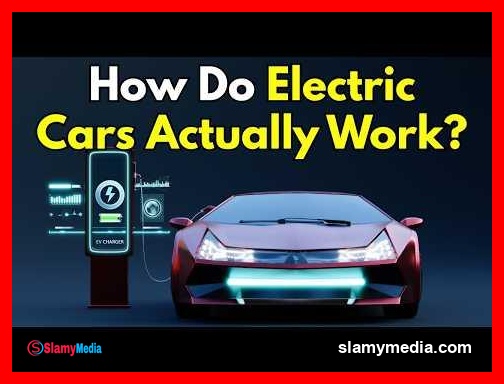
How exactly does a modern electric car work? If you open the hood of an EV, you won't find a massive metal engine block. In fact, you might just find an empty trunk, what people call a frunk. The real magic of an EV is hidden out of sight, right beneath your feet. Modern electric vehicles are built on what engineers call a skateboard design. The entire floor of the car is basically one massive battery pack. But it's not just one giant battery like the one inside your phone. It's actually made up of thousands of smaller battery cells. Many looking a lot like regular AA batteries, all wired together. They store electricity in the form of direct current or DC.
Because this heavy battery pack is laid flat across the bottom of the car, the vehicle has an incredibly low center of gravity. That's why EVs feel so stable and smooth when you turn a corner. But sitting on top of trapped electricity is only the first step. Here is where we run into a little scientific problem. The battery stores electricity as direct current or DC, but the car's motor needs alternating current or AC to run. They speak two completely different languages. Enter the inverter. The inverter is the unsung hero of the electric vehicle, the ultimate translator. When you press the accelerator pedal, the inverter takes the DC electricity from the battery and rapidly flips it back and forth into AC electricity.
And it does this thousands of times a second. How hard you press the pedal tells the inverter exactly how much power to send to the motor. It acts as a silent, instantaneous brain, making sure you get exactly the amount of power you want the millisecond you ask for it. Now, that translated power reaches the heart of the car, the electric motor. And the way this motor works relies on a brilliant scientific principle discovered back in the 1800s, electro magnetism. Inside the motor, there are two main parts, a stationary outside ring called the stator and a spinning inside wheel called the rotor. When the AC electricity from the inverter hits the outside ring, it creates a rotating magnetic field. Think of it like a high speed game of magnetic tag.
The powerful magnetic forces push and pull on the inside wheel, causing it to spin incredibly fast as it tries to catch up to the magnetic field. Because there are no hundreds of tiny explosions like there are in a gas engine, there are no gears to shift, no pistons to pump, and almost no noise. It's just the pure smooth force of magnets chasing each other, transferring their spinning energy directly to the wheels. But the electric car has one final surprising trick up its sleeve. What happens when you want to stop? In a gas powered car, pressing the brake squeezes pads against a metal disc. The forward energy of your moving car is completely wasted as heat. But in EV, uses something called regenerative braking. When you take your foot off the accelerator, the whole process we just talked about runs in reverse.
The electric motor suddenly becomes an electric generator. The forward momentum of the car spins the motor, generating fresh electricity. That electricity is sent back through the inverter and packed right back into the battery. The car slows down and you literally get free miles. From the cobblestone streets of 1900 to the highways of tomorrow, the electric car is a brilliant symphony. It's thousands of tiny batteries, a translating inverter, in the spinning magic of magnets working together. It's a beautifully simple machine, reborn for a modern world. If you enjoyed this journey under the hood, hit that like button, share this video with a curious friend, and subscribe to Simple Things, surprising histories for more fascinating stories hidden in plain sight. See you next time.
**About Me**
My name is Tert Slamy, and I am a content writer at SlamyMedia, a global digital platform that provides news, education, and technology content.
I am passionate about writing informative and engaging articles, especially in areas such as world news, technology, education, and global trends. My goal is to deliver accurate, original, and useful content that helps readers stay informed and understand important topics.
With skills in web development and digital media, I also have experience in creating and managing online content. I always focus on writing high-quality articles that follow ethical standards and provide real value to the audience.
Through my work at SlamyMedia, I aim to contribute to building a trusted source of information for readers around the world.
If you have any questions or suggestions, feel free to contact me:
Email: [slamymokhter@gmail.com](mailto:slamymokhter@gmail.com)
Thank you for reading my articles.




Conversations (0)
Please log in to join the conversation.