

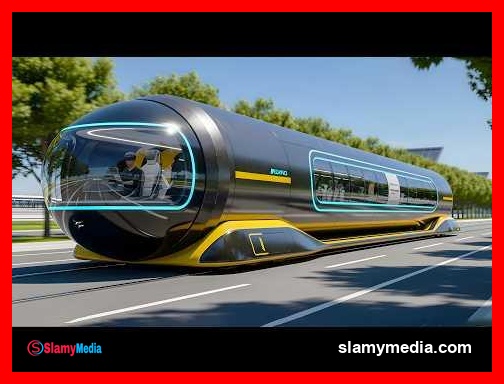
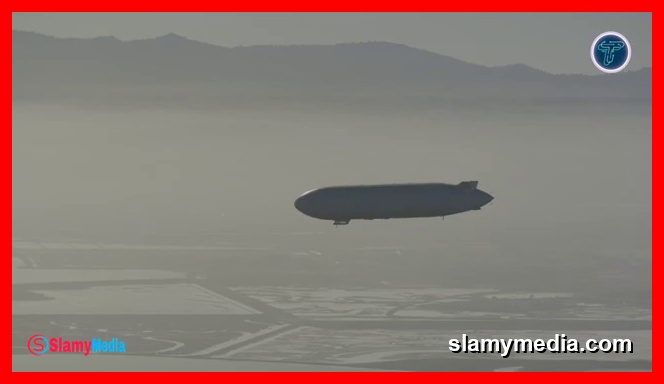
This approach highlights a future where airships could play a key role in connecting isolated areas while reducing environmental impact. CRRC Maglev System The CRRC Maglev System represents a new generation of ground transportation built on magnetic levitation technology. Instead of using wheels, the train floats above the track using powerful electromagnetic forces, removing direct contact and eliminating friction. This allows it to achieve extremely high speeds while maintaining smooth and stable movement. Developed by China's CRRC, the system is designed to reach speeds of up to 600 km per hour, making it one of the fastest rail technologies in development today. Its aerodynamic structure and lightweight design support rapid acceleration and efficient travel over long distances. Advanced control systems and sensors continuously monitor performance, ensuring stability and safety even at extreme speeds. Because there is no physical contact with tracks, noise and mechanical wear are significantly reduced compared to traditional rail systems. This technology demonstrates a shift in transportation design, where efficiency, speed, and precision come together to create a new form of high speed ground travel. Doppler-Mayer Garoventa The Doppler-Mayer Garoventa system represents a major advancement in cable-based transportation, connecting regions through suspended ropeways and aerial mobility solutions. Developed by the Doppler-Mayer Garoventa Group, it combines Austrian and Swiss engineering expertise to create systems used in cities, mountains, airports, and remote areas worldwide. These transport networks operate using cables that move cabins, chair lifts, and gondolas smoothly across challenging terrains where traditional infrastructure is difficult to build. This allows passengers and materials to travel efficiently over rivers, valleys, and dense urban environments without relying on road traffic. Modern installations integrate digital control systems, automation, and advanced safety monitoring to improve reliability and performance. Some systems even feature autonomous operation, reducing the need for constant human supervision while maintaining precision and safety. By blending engineering innovation with practical mobility needs, cable transport systems demonstrate how alternative transit methods can support sustainable and adaptable movement in both urban and remote environments around the world. Space Perspective Neptune Space Perspective Neptune is a new approach to near-space travel using a high-altitude balloon instead of traditional rockets. Developed by space perspective, it carries a pressurized capsule called Spaceship Neptune to the edge of Earth's atmosphere, reaching altitudes of around 30 km. At this height, passengers can observe the curvature of the planet and the contrast between Earth's atmosphere and space. The capsule is designed for comfort, featuring large panoramic windows, cushion seating, and a controlled environment for a smooth ascent and descent. The journey takes several hours from launch to ocean splashdown, offering a slow and stable experience compared to high-speed rocket flights. Although it does not reach orbital space, the system operates far above commercial aviation levels, providing a unique observational perspective. Early test flights have demonstrated the feasibility of the design, supporting further development of balloon-based space tourism systems. Rail EVO The Rail EVO system introduces a new approach to rail transportation by combining autonomous electric vehicles with on-demand travel. Instead of fixed timetables, passengers can book journeys
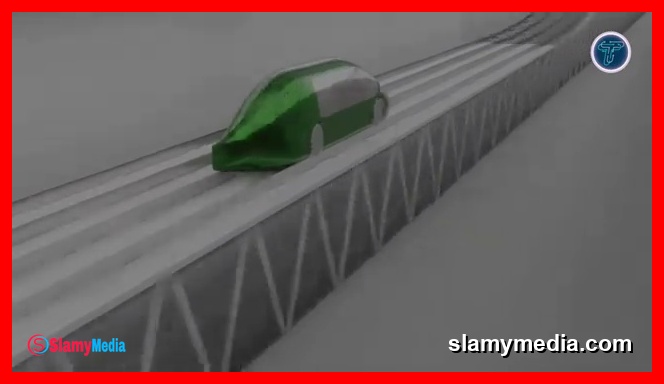
in real-time, similar to ride-hailing services, while using existing railway infrastructure as a flexible transport network. The system operates small automated rail units that move independently along tracks, enabling direct point-to-point travel between stations without traditional scheduling constraints. A key innovation is its intelligent switching mechanism, allowing vehicles to pass through stations and junctions smoothly without stopping, ensuring continuous movement across the network. Rail EVO is designed to optimize underused and single-track railway lines by transforming them into efficient high-frequency mobility corridors. It reduces waiting times, improves accessibility, and enhances overall travel efficiency in both urban and regional areas. Powered by electric propulsion, the system reduces emissions and energy consumption compared to conventional rail transport, reflecting a shift toward more sustainable and adaptive mobility solutions for the future. Kawasaki Alice System The Kawasaki Alice System is a futuristic mobility concept designed to unify different modes of transportation into one seamless journey. Developed by Kawasaki Heavy Industries, it focuses on removing the need for transfers between trains, ships, aircraft, and road vehicles by using a shared autonomous cabin system. At the center of the concept is the Alice Cabin, an automated passenger pod that can be booked on demand like a taxi. Once inside, the cabin can connect with multiple hydrogen-powered transport modes, including rail, road, sea, and air vehicles, allowing passengers to continue their journey without interruption. The system was showcased as a concept for Expo 2025 Osaka Kansai, highlighting a vision of future mobility centered on convenience and connectivity. Each cabin is designed for small groups, offering a comfortable interior with digital interfaces and automated assistance. By integrating multiple transport systems into one network, Alice represents a shift toward more connected, flexible, and user-focused mobility solutions. Watt-Sealer Vision Future of Shipping The future of global shipping is being reshaped by Watt-Sealer, a marine technology company focused on smarter, cleaner, and more efficient maritime transport systems. Their vision highlights a shift toward integrated solutions combining sustainability, digital intelligence, and long-term planning. A key concept is life cycle optimization, where ships are designed, operated, and maintained with efficiency and environmental impact in mind throughout their entire service life. This approach aims to reduce emissions while improving operational performance and cost efficiency over time. Another major direction is flexible decarbonisation, where vessels may use a mix of alternative fuels such as hydrogen, methanol, and LNG, along with hybrid propulsion systems depending on mission requirements. Digitalisation is also central with ships increasingly using real-time data, automation, and analytics to improve fuel efficiency and reduce environmental impact. Together, these trends reflect a transition toward a more connected maritime industry, focused on sustainability, adaptability, and long-term efficiency across global shipping networks. Monocab The Monocab system introduces a new concept in rail transportation by combining autonomous technology with single-rail mobility. Developed through a European research collaboration, it focuses on creating compact self-balancing cabins that operate on existing railway infrastructure. Each Monocab unit is designed to function independently without a driver, offering flexible, on-demand travel similar to ride-hailing services, but on rails.
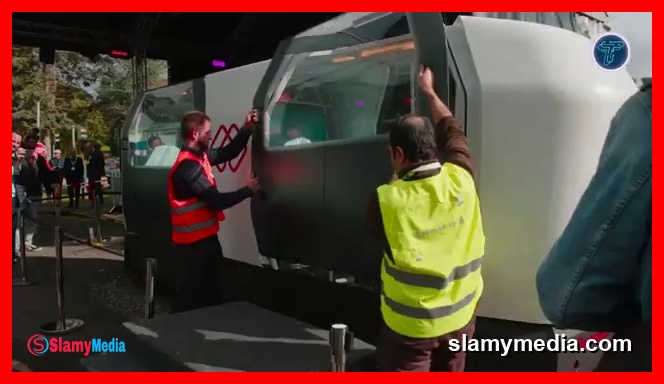
A key feature of the system is its gyroscopic stabilisation, which allows the cabin to remain balanced on a single track while maintaining safe and stable movement. This innovation also enables two cabins to pass each other on the same line, reducing the need for complex dual-track construction. The system is designed to improve transportation in rural and underused railway regions, by providing efficient, electric, and low-emission mobility. Passengers can request a ride when needed, making travel more flexible and accessible. Monocab represents a shift toward automated, sustainable, and adaptive rail solutions for future transport networks. Navier Autonomous Shuttle The Navier Autonomous Shuttle is a fully-electric, driverless vehicle designed for short-distance urban transportation. Developed by Navier, it focuses on connecting key areas such as train stations, campuses, business zones, and residential neighbourhoods through automated routes. The Shuttle has no steering wheel or pedals and operates using advanced technologies like LiDAR, cameras, GPS, and real-time mapping systems. These tools allow it to detect obstacles, follow predefined paths, and navigate safely in controlled environments. It typically carries a small number of passengers and is designed for low-speed travel, reaching speeds of up to around 25 km per hour. The system prioritises safety, accessibility, and frequent stops rather than fast movement. Being fully-electric, it produces zero tailpipe emissions and supports cleaner urban mobility solutions. Navier Shuttles are currently being tested in various pilot projects around the world, exploring how autonomous public transport can be integrated into existing city infrastructure. Dahir Insat Gyroscopic Transport Dahir Insat Gyroscopic Transport The Dahir Insat Gyroscopic Transport concept introduces a futuristic vision for urban mobility, aimed at reducing traffic congestion in densely populated cities. Developed by the design firm Dahir Insat, it features large, disc-shaped vehicles that use gyroscopic stabilisation to remain balanced while travelling above ground-level traffic. Instead of conventional road or rail systems, the concept proposes elevated transport units supported by adjustable structures that allow movement at varying heights. This design could enable vehicles to pass over existing roads, buildings, and infrastructure without requiring major urban reconstruction. The system also envisions integrated renewable energy sources, such as solar panels, to help power onboard systems and improve overall efficiency. Inside, passengers would travel in a cabin-like environment similar to buses or trains, but positioned above congested streets. Although the gyroscopic transport system remains a theoretical concept, it represents an experimental approach to reimagining future city transportation and addressing growing mobility challenges. Navomo Magrail The Navomo Magrail system introduces a new approach to rail transportation by combining magnetic levitation, automation, and existing railway infrastructure. Developed by the Polish company Navomo, it aims to upgrade conventional rail lines rather than replace them, enabling higher speeds without building entirely new networks. The system uses electromagnetic forces to lift vehicles slightly above the tracks, reducing friction, and allowing much faster and smoother movement compared to traditional rail. In future development, Magrail is expected to support speeds of up to 550 km per hour while still sharing tracks with standard trains. A key innovation is the Magrail booster, which enables freight and passenger cars to move autonomously
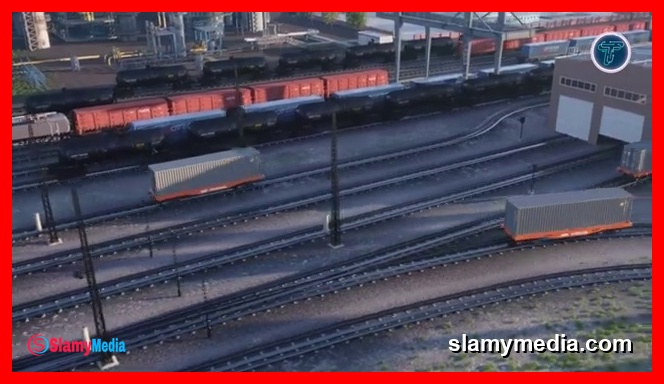
using linear motor technology instead of locomotives. This increases flexibility and reduces operational complexity in rail transport. Successful demonstrations on existing tracks have shown the potential of this hybrid system, representing a step toward faster, cleaner, and more efficient rail mobility in the future transportation landscape. Transport fluxjet The transport fluxjet is a proposed ultra-high speed transportation system designed to move passengers and cargo at speeds exceeding 1,000 km per hour. Developed by the Canada-France-based company transport, it aims to combine elements of aviation and rail into a fully electric ground-based network operating inside a protected guideway. The system reduces air resistance and friction through a low-pressure environment and contactless propulsion technology, allowing extremely high speeds with improved energy efficiency. It is intended to function as part of the transport line, a planned network connecting major cities with frequent departures and reduced travel times. Unlike traditional trains or aircraft, fluxjet is designed for continuous electric operation, focusing on sustainability and lower emissions compared to air travel. The system is also being explored for both passenger and freight transport, offering high-speed logistic solutions. Preliminary planning and development efforts indicate a long-term vision for reshaping intercity travel into a faster, cleaner, and more efficient transportation model. Zooks Robotaxi The Zooks Robotaxi is a fully electric autonomous vehicle developed by Zooks, a company owned by Amazon, designed specifically for driverless urban transportation. Unlike traditional cars modified for self-driving systems, it is purpose-built as an autonomous vehicle with no steering wheel or pedals. Its symmetrical, bidirectional design allows it to move efficiently in both directions, making it suitable for crowded city environments. Inside, passengers sit facing each other in a spacious cabin-like layout, replacing the traditional driver's seat with a fully passenger-focused interior. The system uses advanced technologies such as LIDAR, cameras and radar to achieve 360-degree environmental awareness and enable safe autonomous navigation. Zooks has completed extensive testing in controlled areas and has expanded to public road trials in select US cities under regulatory approval. These tests help improve safety, mapping and performance through real-world data. This vehicle represents a step toward fully autonomous urban mobility systems designed for future transportation networks. Waymo Driver The Waymo Driver is an advanced autonomous driving system developed by Waymo, a company that originated from Google's self-driving project. It is designed to fully replace human drivers by handling every part of the driving process, from navigation to stopping at destinations without any manual control. The system uses a combination of technologies including LIDAR, cameras, radar and high-definition mapping to understand its surroundings in real-time. These sensors allow it to detect vehicles, pedestrians, traffic signals and road conditions with high precision. Waymo has tested its technology across millions of miles on public roads and billions of miles in simulation to improve safety and reliability. Its latest generation system is designed to operate more efficiently across different urban environments while maintaining strict safety performance. Today, the Waymo Driver is being used in autonomous ride-hailing services in select cities, representing a step toward fully driverless urban transportation powered by artificial intelligence
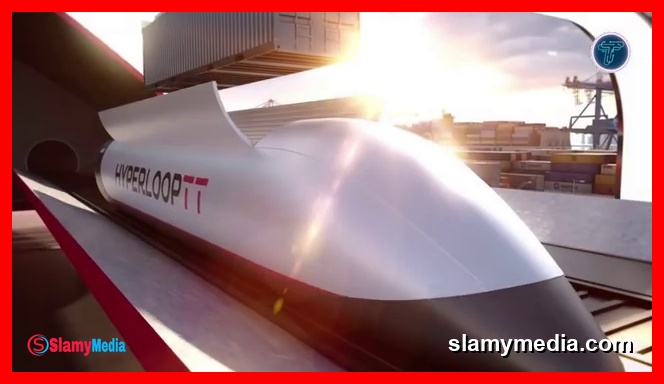
and advanced sensor systems. Hyperloop TT Hyperport The Hyperloop TT Hyperport is a proposed high-speed freight transportation system designed to transform how containerized goods move between ports and inland logistics hubs. Developed by Hyperloop transportation technologies in collaboration with global partners, it applies Hyperloop principles to cargo rather than passengers. The system uses sealed tubes with low-pressure environments where specialized capsules transport standard shipping containers. Each capsule can carry either two 20-foot containers or a single larger container, allowing compatibility with existing global shipping standards. By removing direct contact with air and ground-based friction, the system aims to achieve extremely high speeds while improving safety and efficiency. It is designed to integrate with existing port infrastructure, enabling smoother cargo transfers without major structural changes. Development work includes simulations, engineering studies and prototype planning focused on scalability and real-world application. The concept is intended to reduce delivery times, ease highway congestion and improve the overall efficiency of global supply chains. Airspace Cabin Vision 2035 Plus The Airbus Airspace Cabin Vision 2035 Plus is a concept that explores how future aircraft interiors may evolve to make air travel more sustainable, efficient and passenger focused. Developed by Airbus, it highlights new ideas for reducing environmental impact while improving comfort inside commercial airplanes. A major part of the vision is lightweight cabin design using advanced materials, bionic structures and 3D printing techniques. These innovations aim to reduce overall aircraft weight, which can help lower fuel consumption and emissions during flights. The concept also introduces circular design principles, focusing on reuse, recycling and repair of cabin components to reduce waste throughout the aircraft life cycle. Smarter onboard systems are included to improve efficiency in services such as catering and passenger management. It also envisions more flexible and connected cabin spaces with adaptive layouts. Overall, the Airspace Cabin Vision 2035 Plus represents a future where aviation becomes cleaner, smarter and more efficient. Pony.AI 7th Gen Robotaxi The Pony.AI 7th Generation Robotaxi is an advanced autonomous driving system developed by Pony.AI to support large-scale driverless transportation in real urban environments. Unveiled in 2025, this generation focuses on improving safety, reducing costs and enabling mass deployment of self-driving taxis across major cities. The system is built on a fully automotive grade autonomous driving kit designed for durability and long-term performance. It integrates upgraded sensors, computing units and AI software to help the vehicle perceive surroundings, predict traffic behavior and navigate complex city roads without human input. A key improvement in this generation is cost reduction, achieved by optimizing hardware design and manufacturing, making large fleets more commercially viable. The platform is also designed to work across multiple vehicle models through partnerships with major automakers. By 2025, Gen 7 Robotaxi began mass production and real-world testing in several Chinese cities, marking a shift from experimental technology to active deployment in everyday transportation systems.

Conversations (0)
Please log in to join the conversation.