

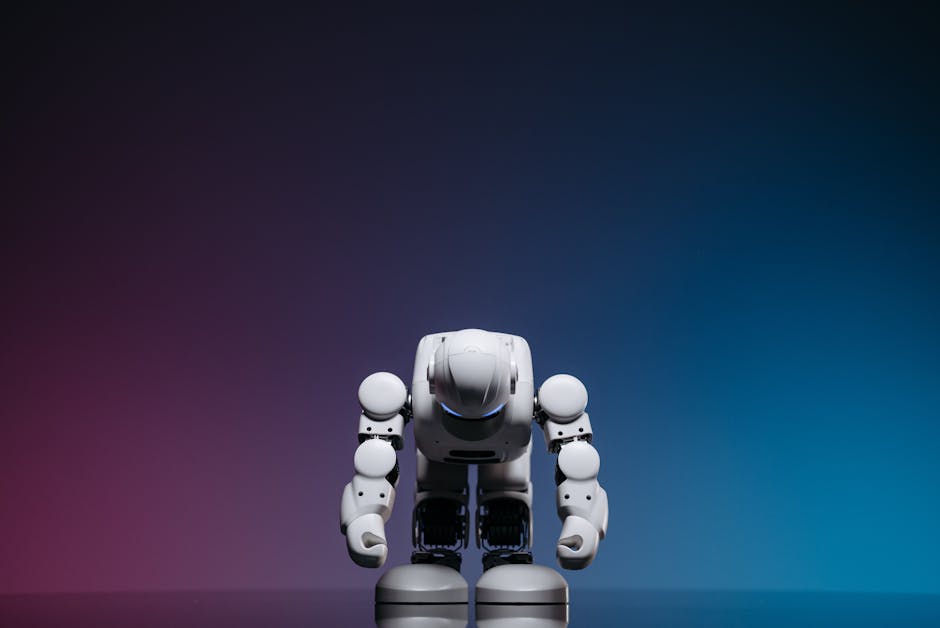
Elon Musk's Mars Strategy Shifts to Robot-Driven Colonization
Elon Musk, once seen as a dreamer with grand visions of Mars, is now pivoting his approach to colonizing the Red Planet. What began as a series of bold statements about interplanetary travel has transformed into a meticulously planned strategy focused on robotic exploration and infrastructure development. This shift comes as Musk faces the immense challenges of sending humans to Mars, which has long been deemed too dangerous, too expensive, and too risky for large-scale human missions.

Key Takeaways
- Musk's Mars mission is now centered on sending autonomous robots to build infrastructure before human colonists arrive.
- Human space travel faces significant health and safety risks, including radiation exposure, muscle atrophy, and long-term medical issues.
- Robot-led missions are seen as a more cost-effective and safer approach to establishing a human presence on Mars.
According to former SpaceX employees, the company's internal mantra has always been that "all roads lead to Mars." Every project, from the Raptor engines to Starship rockets, is ultimately aimed at making humanity an interplanetary species. However, the path to Mars has become increasingly complex. While the dream of human colonization remains, the practical challenges have led to a new strategy: sending robots first.
"The main problem with Mars has always been that humans are incredibly vulnerable," said a former SpaceX employee. "Even today, after decades of space technology development, humanity still does not know how to safely send people on long inter, interplanetary journeys."
Historically, space agencies like NASA have explored Mars, but these efforts were often delayed due to the astronomical costs and risks involved. A full-scale mission to build a base on Mars could cost trillions of dollars, an expense that even superpowers find hard to justify. This has made Musk's vision of a Mars colony seem almost impossible until now.

Why Robots Are the Key to Mars Colonization
The idea of using robots to prepare Mars for human colonization is not new, but it has gained new urgency with the development of advanced artificial intelligence and next-generation humanoid robots. These machines can operate in the harsh conditions of Mars, perform complex tasks, and even build infrastructure without the need for human intervention. This approach allows for a more sustainable and cost-effective way to establish a presence on the Red Planet.
Autonomous robots can be deployed to construct habitats, set up life-support systems, and even begin mining for resources essential for sustaining human life. By doing this, the first wave of colonists would arrive to a planet that is already partially developed and equipped with the necessary infrastructure to support human survival.

The Challenges of Human Space Travel
A journey to Mars is not just a matter of distance. A one-way trip would take approximately 6-9 months, during which time astronauts would be exposed to cosmic radiation, a major health risk. Studies show that prolonged exposure can lead to cognitive impairments, memory loss, and a reduced ability to make decisions. Additionally, the human body undergoes significant changes in microgravity, including muscle atrophy, bone density loss, and cardiovascular restructuring.
These physiological changes are not just a concern during the journey; they also pose a risk once astronauts arrive on Mars. The planet's environment is hostile, with extreme temperatures, dust storms, and a lack of breathable air. Moreover, the communication delay with Earth—ranging from several minutes to almost half an hour—means that any emergency on Mars would be met with a critical delay in response.

The Future of Mars Colonization
With the development of artificial intelligence and robotics, Musk's vision of a Mars colony is becoming more feasible. By using robots to build the necessary infrastructure, the risks associated with human space travel can be significantly reduced. This approach also allows for a more gradual and sustainable expansion of human presence on Mars, rather than attempting to send thousands of people at once.
As Musk continues to refine his strategy, the focus remains on making Mars a viable second home for humanity. The shift from human-led missions to robot-driven colonization represents a significant step forward in the quest to become an interplanetary species.

Disclaimer: This article was compiled and adapted from historical reporting and enhanced for readability. Some quotes may be paraphrased for clarity.



Conversations (0)