With just six short posts, Elon Musk flipped his entire space strategy on its head, and SpaceX is now officially placing the moon at the center of its plans. This is the same person who only months ago argued that the moon was a distraction. The same CEO who spent most of his career insisting that no destination other than Mars was truly worth pursuing. The same executive who repeatedly dismissed lunar missions as a waste of resources that should be focused on building an interplanetary civilization. And yet today, he is committing SpaceX to becoming the tool that will build a city capable of growing and expanding on its own right on the surface of the moon. That raises some huge questions. What could possibly shift a mindset that once seemed so firm? How do you create a self-expanding city in an environment with no air, no liquid water, and constant radiation? And what challenges will test the very first humans who set foot there to stay? That's exactly what we're unpacking in today's episode of TechMath. Mars's biggest obstacle comes down to launch timing. Earth and Mars line up in a favorable position for missions only once every 26 months, and each journey takes about six months. The consequence is brutal. If anything breaks, if a design fails, or if you need to test an improvement, you face a two-year wait before you get another shot. The moon operates on a completely different rhythm. Launch windows open roughly every 10 days, and the trip takes just two days. By Musk's own estimates of functioning lunar city could be up and running in under 10 years, while a Martian city would take closer to 20. This isn't a retreat from Mars. It's a strategy to make Mars achievable. Every system that must eventually work on Mars, radiation shielding, closed-loop life support, automated construction, and producing fuel from local materials can be tested on the moon with turnaround times measured in weeks.
Article Image 1
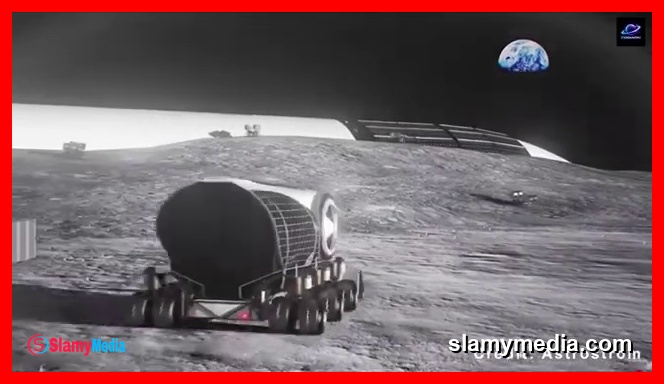
A failure on the moon can be fixed in a matter of weeks. A failure on Mars could mean years of delay. The economics change just as dramatically. A starship launch to the moon costs roughly the same as one to Mars, but in the time Mars allows a single attempt, the moon allows around 15. That means 15 chances to refine landing techniques. 15 opportunities to test new hardware, 15 learning cycles. The moon becomes a high-speed development lab, while Mars waits for the technology to mature from afar. At the heart of this vision is alpha-base, formed from starships that never fly home. Once a starship lands on the moon, it's permanently repurposed, and its massive fuel tank becomes a pressurized living volume. A single vehicle provides about a thousand cubic meters of habitable space, roughly equal to the entire living volume of the International Space Station, without any traditional construction or assembly. The cargo ship literally becomes the habitat. If the fuel systems are repurposed for water recycling and air circulation, you gain an additional 1400 cubic meters of usable volume. Location is just as critical as design. Shackleton Crater, near the moon's South Pole, offers a rare combination of near-constant sunlight along its rim for power generation, and permanent shadow at its floor, where water ice has accumulated over billions of years. Sunlight provides energy, ice provides drinking water, breathable oxygen, and rocket fuel. The site also offers a major communication advantage, more stable line of site contact with Earth compared to equatorial regions that lose direct contact during the long lunar night. Nearby lies the South Pole 8-kin basin, one of the largest and oldest impact craters in the solar system, where deep crustal material is exposed at the surface. Scientists could study material from the moon's interior without drilling kilometers into solid rock. This is no longer speculation. Orbital surveys have already confirmed the presence of ice. The engineering pathway is clear. Heat the megalith, capture the released water vapor, and split it into hydrogen and oxygen. Oxygen sustains human life, and hydrogen combined with oxygen becomes rocket fuel.
Article Image 2
The moon has no global magnetic field, and no atmosphere, which means solar radiation and cosmic rays strike the surface directly with no natural shielding. Humans cannot survive in that environment without protection. That protection, however, is right under their feet. Regolith, the fine dust that blankets the lunar surface, becomes a powerful radiation shield when piled on top of habitats. Just a few meters of compacted soil can block most harmful radiation. Some designs go even further by placing entire structures inside natural lava tubes, ancient volcanic caves that already provide thick protective walls. Building underground also solves another major problem, temperature. The moon's surface can swing by nearly 300 degrees Celsius between sunlight and shadowed areas, while underground temperatures remain relatively stable. That stability reduces the energy needed for heating and cooling, and creates a far more consistent environment for equipment and human health. Life support on the moon operates as a completely closed loop. There is no resupply if something goes wrong. The base must recycle everything. Water, air, and even waste. Advanced filtration systems recover water from humidity in the air, from urine, and from wastewater. Carbon dioxide scrubbers capture CO2 from exhaled breath and recycle it back into oxygen. Initial food supplies come from Earth, but hydroponic and aeroponic systems, growing plants without soil, gradually take over to provide fresh produce on site. These systems use up to 90% less water than traditional agriculture and deliver faster yields thanks to tightly controlled conditions. The core engineering philosophy is triple redundancy. Every critical life support system has two fully independent backups. If the primary oxygen generator fails, a secondary unit activates immediately. If that also fails, a third stands ready. The same principle applies to water recycling, power generation, and thermal control. In an environment where a single failure can be fatal,
Article Image 3
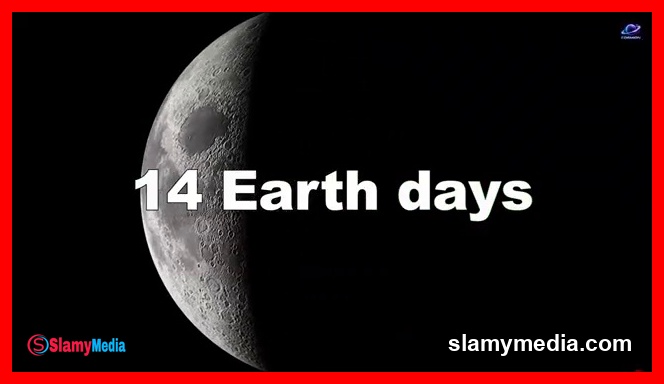
redundancy is not optional. It is mandatory. Power systems are designed to be diverse and resilient. Solar panels spread across crater rims capture sunlight for long stretches, but the lunar night lasts about 14 Earth days, far too long for batteries alone to handle. The solution is compact nuclear fission reactors, scaled down versions of terrestrial designs, providing continuous baseline power. Together, solar and nuclear energy ensure the base never loses electricity, never shuts down life support systems, and never cascades into disaster because of a single weak point. Launching construction materials from Earth currently costs around $10,000 per kilogram. Building an entire city that way would be financially impossible. The only viable solution is to use what's already there. 3D printers adapted specifically for lunar regolith can build structures layer by layer, using binding agents or concentrated sunlight to fuse dust into solid blocks. Robots handle the dangerous tasks, extivation, transport, and assembly, while humans focus on oversight and complex decision-making. Robots don't need shifts or rest, they work continuously. Autonomous excavators dig trenches for underground tunnels, construction drones stack regolith blocks into walls, and specialized vehicles' hall materials between work sites. A team of 10 people could supervise hundreds of machines. Resource extraction follows the same model. Automated drills bore into permanently shadow of craters, heating units warm the regolith, collection systems capture water vapor, and processing plants split it into hydrogen and oxygen. The entire chain runs with minimal human intervention. The base grows not through human labor, but through managed automation. Some bold concepts even propose a lunar space elevator, a cable stretching from the surface to the Earth Moon L1 Lagrange point, about 62,000 kilometers away. Things to the Moon's weak gravity, this idea is theoretically feasible even with existing materials like Kevlar. Solar powered elevator cars could move cargo up and down without rockets, potentially cutting transport costs to as little as $1 per kilogram. The technology is within reach, the remaining challenge is scale, not physics. The most frightening challenge doesn't lie in engineering, it lies in the human mind. The first residence of the Moon will live inside a facility no larger than a football field, with no weather, no natural landscapes,
Article Image 4
and no ability to step outside without wearing a pressurized suit. Every call back to Earth will carry a three-second delay each way, enough to make conversations feel awkward and unnatural. The sense of confinement can quietly wear down morale. Minor everyday frictions can escalate quickly. Antarctic research stations and submarine crews have reported the same pattern. Isolation intensifies internal conflict. A lunar base therefore cannot rely only on advanced air filtration systems. It must also include psychological support infrastructure, dedicated recreation areas, virtual reality environments that recreate Earth's nature, and frequent video connections with loved ones. Crew selection standards will draw lessons from long ocean voyages and the communication blackouts of Antarctic winters, resilience under pressure, conflict resolution skills, and emotional endurance. Professional expertise matters, but the ability to live harmoniously and cooperate matters even more. In a small community, one person lacking communication skills can strain the entire group. Low gravity introduces its own medical challenges. Bone density declines, muscles gradually weaken. Lunar gravity is only one-sixth of Earth's, enough to avoid the severe damage seen in zero gravity environments, but not enough to maintain normal long-term human physiology. High intensity exercise programs, resistance training equipment, and even rotating modules that simulate artificial gravity will become essential parts of daily life. But a self-sustaining lunar city is more than just a stepping stone to Mars. The survival technologies developed in vacuum and radiation heavy environments have immediate applications back on Earth. Closed-loop water recycling systems designed for the moon could serve water-scarce regions. Advanced hydroponic farming from lunar greenhouses could boost food production in air-edlands. Radiation shielding techniques could protect astronauts, high altitude pilots, and even cancer patients undergoing radiation therapy. Remote-controlled construction robots perfected on the moon could be deployed in disaster zones
Article Image 5
or hazardous industrial sites. A lunar base becomes a real-world laboratory for innovations that solve Earth's problems while preparing humanity to expand beyond it. The roadmap that has been outlined is ambitious, a functioning lunar base within 10 years, followed five to seven years later by the first crude missions to Mars. It's a dense timeline, but not an unrealistic one. Heavy-lift launch capability from Starship is progressing, life support technology prototypes already exist, and lunar ice reserves have been confirmed. What remains is execution, landing the first ships, building power systems, initiating resource extraction, and successfully operating closed life support loops. Each milestone reduces risk for Mars. Every failure can be corrected quickly because the moon is close. The speed of experimentation matters more than the final destination. You learn faster with a test every month than one every two years. The strategic pivot from Mars to the moon reveals a core philosophy, optimized for learning velocity. Faster experiments mean more experience. More experience means the toughest problems begin to reveal their solutions. Mars remains the distant goal, but the moon is now the proving ground. If SpaceX can build a self-sustaining settlement 384,000 kilometers away, similar systems will have a strong foundation to operate 225 million kilometers from Earth. Humanities' first permanent settlement beyond Earth will not emerge because it was easy to build, but because its technologies were proven step-by-step and the roadmap became achievable. This strategic shift is not a retreat. It is the shortest path forward. That city will grow with every Starship mission, every landing that adds new capability, every successful extraction of water ice that strengthens confidence, and every month of stable operations that replaces uncertainty with knowledge. 10 years from now, if the timeline stays on track, humans may be living on another world, not visiting, living, and the moon will no longer be a stopover. It will be a home. Thank you for staying with us until the end of the video. If you found it interesting and worthwhile, please support us with a like and subscribe to the channel so we can keep creating more great content for you. Sincerely, thank you.