Can you believe that the Tesla CyberCab might be the first car designed for visually impaired users? And on top of that, it also breaks a major Tesla tradition. It's the first time Tesla has introduced a completely new driving system for a vehicle since the company was founded. Lately, a lot of CyberCabs have been spotted, and the Robotaxi fleet has already grown to over 526 vehicles, with more and more images showing the official design, interior features, and now even a glimpse inside the factory, revealing an almost unbelievable production line. Tesla seems to be getting very close to mass production, possibly just days away based on the announced production schedule. So how exactly does the CyberCab break Tesla's traditions? Why might visually impaired users love it? And if you want to experience this Tesla vehicle for yourself, here's what you need to know. Don't miss it. Recently, images of the CyberCab parked next to the Model Y revealed a lot of details that most people overlooked. This is one of the rare times we get such a clear look at the CyberCab size. And as you can see, the difference is pretty striking. The Model Y is about 188 inches long, 75.6 inches wide without mirrors, and 64 inches tall, with a wheelbase of 113.8 inches. Meanwhile, the CyberCab is around 175 inches long, about a foot shorter, and only 63 inches wide. This slimmer design makes the CyberCab much more compact, easier to maneuver in tight urban environments, and better suited for standard parking spaces that might feel cramped for the Model Y. It's also lower in height, giving it a sleeker, more coupe-like profile compared to the taller, crossover shape of the Model Y. Visually, the difference is unmistakable. The Model Y looks like a family-friendly SUV, with traditional doors, a prominent hood, and a spacious glass roof. Meanwhile, a former Tesla engineer has suggested that the CyberCab could have about 50% fewer parts than the Model 3, and that could help Tesla scale production much faster than competitors in the autonomous vehicle space, like Waymo in the U.S. However, what Tesla hasn't told us about the CyberCab might actually be the most shocking part. It could be the first car to use a pull-based system instead of push, and that could break a major tradition the company has followed since day one. So why is that, as we all know? Tesla has always been associated with rear-wheel drive, RWD, or all-wheel drive, AWD, for a brand known for performance, quick acceleration, and a sporty driving experience, even considering a switch to front-wheel drive isn't just a technical change. It reflects a bigger shift in product philosophy, especially since the CyberCab is positioned as a fully autonomous vehicle for mass ride-hailing services. Yeah, based on reports and people who have actually experienced the CyberCab, Tesla's robotaxi could be using a front-wheel drive, FWD setup. While that might sound unusual for a performance-focused company, it actually makes a lot of sense for a practical, high-volume vehicle built specifically for ride-hailing for Tesla fans. This might feel a bit unfamiliar. Since models like the Tesla Model S,
រូបភាពទាក់ទងនឹង Cybercab Robotaxi Break A Major Tesla Tradition, Mass Number Spotted! (1)
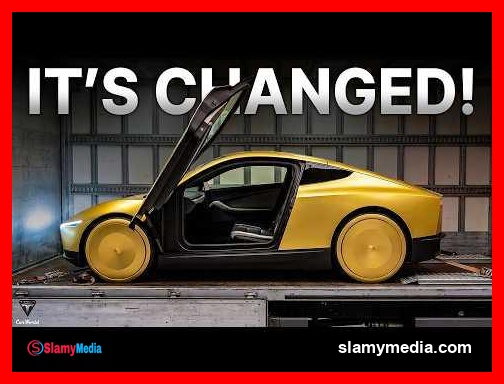
Tesla Model 3, Tesla Model X, and Tesla Model Y have never used a front-wheel drive layout, but if you look deeper at the CyberCab's purpose, the choice actually seems pretty logical in automotive design. Front-wheel drive, FWD, is often chosen for efficiency and smart packaging. By placing the motor and drive train up front, engineers can usually maximize interior space and cargo capacity, which is exactly what you'd want in a compact, fully autonomous taxi design to move people as efficiently as possible, for a two-seat robotaxi designed to navigate narrow city streets. Front-wheel drive provides more stable handling and better traction in slippery conditions like rain or snow. Since the weight of the motor sits directly over the wheels responsible for pulling the car, on the other hand, as we all know, the CyberCab isn't a traditional personal vehicle, it's a robotaxi. This means factors like production cost, durability, energy efficiency, and ease of maintenance matter far more than driving feel or acceleration performance. FWD is well known for being more cost-effective, simpler and design, and more space-efficient, which makes it ideal for mass-market vehicles. With the motor and drive train positioned at the front, manufacturers can optimize interior space and reduce the number of complex components, ultimately lowering large-scale production costs. Put simply, a front-wheel drive system is less complex and can be cheaper to manufacture and maintain than a rear-wheel drive system, especially for a vehicle that doesn't need to prioritize sporty acceleration or high-speed drifting capability. Compared to RWD, FWD typically saves around 500 to $1,000 and compared to all-wheel drive, it can reduce costs by about $1,500 to $3,000. However, one thing we still can't fully explain is that some images have shown the CyberCab with a staggered wheel setup. The front wheels appear to use 18-inch tires, while the rear wheels are fitted with significantly larger ones likely around 21 inches. This raises some questions, because in automotive engineering, having larger and wider tires at the rear is usually a hallmark of rear-wheel drive vehicles. As far as we know, front-wheel drive vehicles typically use the same tire size on all four wheels, since the front tires already handle steering, acceleration, and most of the braking, a staggered wheel setup with larger rear wheels. On a front-wheel drive car would be highly unusual and inefficient. If Tesla sticks with this design and production, it would almost certainly confirm that the electric motor is driving the rear wheels to handle the instant torque of the electric drive train. So what do you think? Could Tesla actually launch both FWD and RWD versions of the CyberCab setting aside the drive train mystery? Tesla will likely reveal more as soon as next month when mass production begins. The growing number of CyberCab siding suggests it's steadily shaping up to be a true high-tech flagship. As Tesla prepares to ramp up production, we already know the vehicle will feature a one-button door opening system, combining an electronic
រូបភាពទាក់ទងនឹង Cybercab Robotaxi Break A Major Tesla Tradition, Mass Number Spotted! (2)
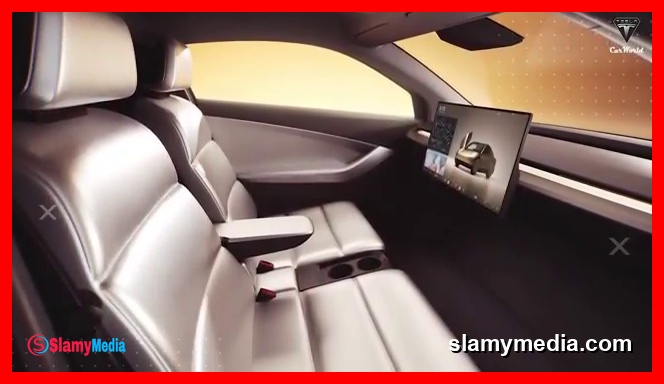
latch with a mechanical backup for safety. The interior is extremely minimalistic. If you look closely, the CyberCab s seats are designed very differently from those in traditional cars. They're more like a mobile sofa. The seat depth extends further under the knees, creating a sink and feeling that's soft and comfortable. This design allows passengers to fully relax while the car drives itself, without being locked into a rigid posture. In terms of materials, the seats use synthetic leather, not particularly luxurious, but highly practical since it's easy to clean and maintain. The seat surfaces are smooth, without perforations or gaps, which helps prevent dirt or food from getting trapped inside, an important feature for a robot taxi service. Of course, as far as we know, passengers may be charged extra if they make a mess inside the vehicle. With ambient interior lighting and a massive 21-inch touchscreen, the cabin has no steering wheel or pedals. Recent images also confirm the presence of a physical charging port, although Tesla is expected to transition to wireless inductive charging in the future to support fully unsupervised self-driving. The vehicle is equipped with a large number of cameras, along with a dedicated cleaning system for each exterior camera. This includes a large cabin-facing camera and front sensors that are bigger than anything we've seen on the Tesla Model 3 or Tesla Model Y. There's even a camera inside the trunk, something we've never seen before on a Tesla vehicle. Likely meant to alert passengers if they leave belongings behind. The Model Y offers a very practical amount of storage space, about 4.1 cubic feet in the front trunk and 30.2 cubic feet behind the rear seats. Expanding up to 72 cubic feet with the second row folded flat, it can comfortably carry groceries, luggage, or sports gear for up to five passengers. The Cyber Cab, on this other hand, is designed for just two passengers, trading that extra cargo space for operational efficiency. It features a wide rear hatch with enough room for two carry-on suitcases and personal items, which is perfect for a typical robot taxi trip. While still maintaining comfortable leg room and headroom for passengers, as mentioned earlier. Tesla's Cyber Cab is seen as a major step forward in accessibility for visually impaired users, thanks to the inclusion of Braille-labeled controls. These allow blind passengers to identify and use essential functions like emergency buttons or warning lights. In a vehicle with no driver, visually impaired passengers need to be able to locate and activate an emergency stop without relying on someone else. Braille labels make that possible through touch alone. This isn't currently a regulatory requirement, at least not yet. The accessibility standards under the Americans with Disabilities Act for Autonomous Vehicles are still being defined, and there's no federal rule specifically requiring Braille on emergency controls in robot taxes. Tesla seems to be getting ahead of the curve here, and it doesn't stop there. The Cyber Cab's door handle system has also been completely redesigned, addressing one of the most
រូបភាពទាក់ទងនឹង Cybercab Robotaxi Break A Major Tesla Tradition, Mass Number Spotted! (3)
criticized safety concerns in Tesla's current lineup. The new design simplifies entry and exit by combining both electronic and manual door operation into a single unified interface. Right now, Tesla owners typically have to use a button to exit the car under normal conditions, and in an emergency, they need to locate a separate mechanical release lever, which is often hidden and not very intuitive inside the Cyber Cab. There's a pull-style switch built into the door frame that controls both electronic and manual release. As shown in demonstrations, a light pull activates the electronic system, while pulling further engages the mechanical emergency release. This dual-action mechanism is a major safety upgrade. If the car has power, a gentle pull triggers the electronic actuator and the door opens automatically. But if the vehicle loses power, pulling the handle further activates a mechanical cable to unlatch the door. This ensures that even a panicked passenger who has never been in a Tesla before can instinctively exit the vehicle without needing instructions in the United States. The National Highway Traffic Safety Administration has recently opened investigations into Tesla's emergency egress systems after incidents where occupants had difficulty exiting vehicles quickly. The pressure is even higher in China, where regulators have introduced a ban on vehicles that rely solely on electronic door handles. Starting next year, all cars sold in China must include a mechanical door release system that's easy to use from both inside and outside. This is already forced Tesla to redesign the latching systems on models like the Tesla Model 3 and Tesla Model Y. Tesla's head of design. Franz von Holtzhausen previously acknowledged the issue and promised a really good solution was in the works. The Cyber Cab appears to be the first vehicle to fully implement that solution. Tesla hit its first major milestone on February 17th, 2026, when the first production Cyber Cab rolled off the line at Gigab Texas. Elon Musk has repeatedly stated that full-scale production will begin in April. This is already the third time he's reinforced that timeline in just a few months, showing a high level of confidence. For now, this is still considered a pilot production phase. With limited initial output recent drone footage shows dozens of Cyber Cabs being tested, lined up in delivery zones, crash test areas, and running on internal factory roads. Tesla's production ramp is expected to follow its typical S-curve, starting off slowly since this is a completely new product with hundreds of new parts and assembly steps. Then accelerating rapidly once the line stabilizes, Elon Musk has described the early phase as agonizingly slow, but eventually reaching insanely fast speeds thanks to a revolutionary manufacturing design. The most notable part of how Tesla is building the Cyber Cab is the unboxed process, unlike traditional assembly lines, where the car body is built as a closed box and workers have to climb inside to install components. The unboxed method completely flips that logic. Tesla breaks the car into large modules, or subassemblies, like the front section hood and
រូបភាពទាក់ទងនឹង Cybercab Robotaxi Break A Major Tesla Tradition, Mass Number Spotted! (4)
dashboard, rear section, battery pack, seats, windshield, and chassis. Each module is built separately on parallel production lines. Robots and workers can easily access the area from all sides without being limited by narrow spaces. Only at the final stage are these modules brought together at a box assembly station to form the complete vehicle. This method brings major advantages, like cutting factory footprint roughly in half and potentially reducing production costs by up to 50%. That's likely why Elon Musk is confident Tesla can hit a price point of around $30,000 for the Cyber Cab. On top of that, by combining gigapress technology with the unboxed process, Tesla can dramatically increase assembly speed, targeting cycle times of under 10 seconds per vehicle, far faster than what we see today with the Tesla Model Y. At Gigatexis, the dedicated Cyber Cab Unboxed line is located in a newly expanded production area near the Model Y and Tesla Cybertruck output zones. The factory itself is expanding with new equipment, parts storage, and quality control areas. Tesla has been hiring more workers and running full production trials since late 2025, and current reports suggest the line is now being fine-tuned to reach a target of hundreds of vehicles per week once mass production begins. Initial production will ramp up slowly. In the first few months after April 20th 26, Tesla is expected to produce only dozens to a few hundred vehicles per week, focusing on refining quality and fixing early issues. Once the production line stabilizes, the short-term goal is to reach several hundred units weekly, long-term. Tesla is aiming for massive scale, around 2 million vehicles per year, potentially even up to 5 million annually if Robotaxi demand explodes. Elon Musk has called the Cyber Cab the highest volume vehicle in Tesla's history. With a projected price under $30,000 and low operating costs, thanks to fully autonomous driving. Tesla is aiming to build the largest Robotaxi network in the world. Revenue from ride-hailing services could eventually surpass traditional vehicle sales. By late 2026, production is expected to ramp significantly. With 2027, marking a major acceleration phase. That said, the unboxed approach still comes with major challenges. Tesla needs to fully master this new manufacturing process, ensure battery quality, refine autonomous hardware, and successfully integrate unsupervised full-self driving. Supply chain stability, regulatory safety validation from agencies like the National Highway Traffic Safety Administration, and infrastructure expansion will all be critical so far. Tesla Robotaxi incidents have generally been low in severity, mostly occurring at low speeds with minimal injuries. However, absolute numbers alone don't tell the full story. In transportation, the most important metric is accidents per mile driven. This is where Tesla faces criticism, as the company does not consistently disclose monthly mileage data, making it difficult to accurately assess safety trends. Some estimates suggest Tesla's Robotaxi accident rate is around 1 incident per 57,000 miles, significantly higher than
រូបភាពទាក់ទងនឹង Cybercab Robotaxi Break A Major Tesla Tradition, Mass Number Spotted! (5)
the US. Human driver average of about 1 per 500,000 miles, according to the National Highway Traffic Safety Administration. While these are only estimates, they raise serious questions about the maturity of the technology. Scale is another important factor, despite surpassing 500 vehicles after months of testing. Most of Tesla's fleet still includes human safety operators inside the car. This suggests the system is not yet fully autonomous as originally envisioned, compared to Waymo, which operates thousands of vehicles and has accumulated hundreds of millions of miles. Tesla is clearly at an earlier stage. Another point of debate is Tesla's technical approach. The company primarily relies on cameras rather than LiDAR, which many competitors use. This raises concerns about environmental perception in challenging conditions, sometimes leading to so-called hallucinations, or misidentifying objects. Although Elon Musk has argued that LiDAR is unnecessary, experts still haven't reached a consensus on the positive side. Tesla appears to be taking a relatively cautious rollout strategy, operating in limited areas at lower speeds, and with human supervision. Hardware improvements like better cameras, sensor cleaning systems, and optimized interior design also show the company is actively working to improve safety. Robotaxies are now on the verge of becoming a major turning point in how people move, much like how ride hailing apps once transformed the traditional taxi industry. With Tesla's ambitions, this isn't just a transportation service. It's the foundation for an entirely new ecosystem built on AI and automation. If successfully deployed at scale, robotaxies could lower travel costs, save time, and reduce human error, which is responsible for most traffic accidents today. That said, this transition won't happen overnight. Concerns around safety, transparency, and real-world performance remain significant barriers to earn public trust. Elon Musk and Tesla will need to prove that their technology is not only effective in controlled environments, but also safe in the complex and unpredictable conditions of the real world. Still, it's hard to deny that robotaxies are opening up an entirely new business model for Tesla. One where cars are no longer just personal assets, but part of a continuously operating on-demand transportation network. This could fundamentally change how people think about car ownership, potentially making private vehicles less necessary in the future. In short, robotaxies are more than just a piece of technology. They represent a transformative leap. If Tesla can overcome the current challenges, this could reshape the entire transportation industry and become the company's next major growth engine for decades to come. What do you think about sitting in a self-driving car? Would you be nervous or excited? We think we'd be quite nervous, but also a little excited. Thanks for watching and see you again.